Last updated November 21, 2026
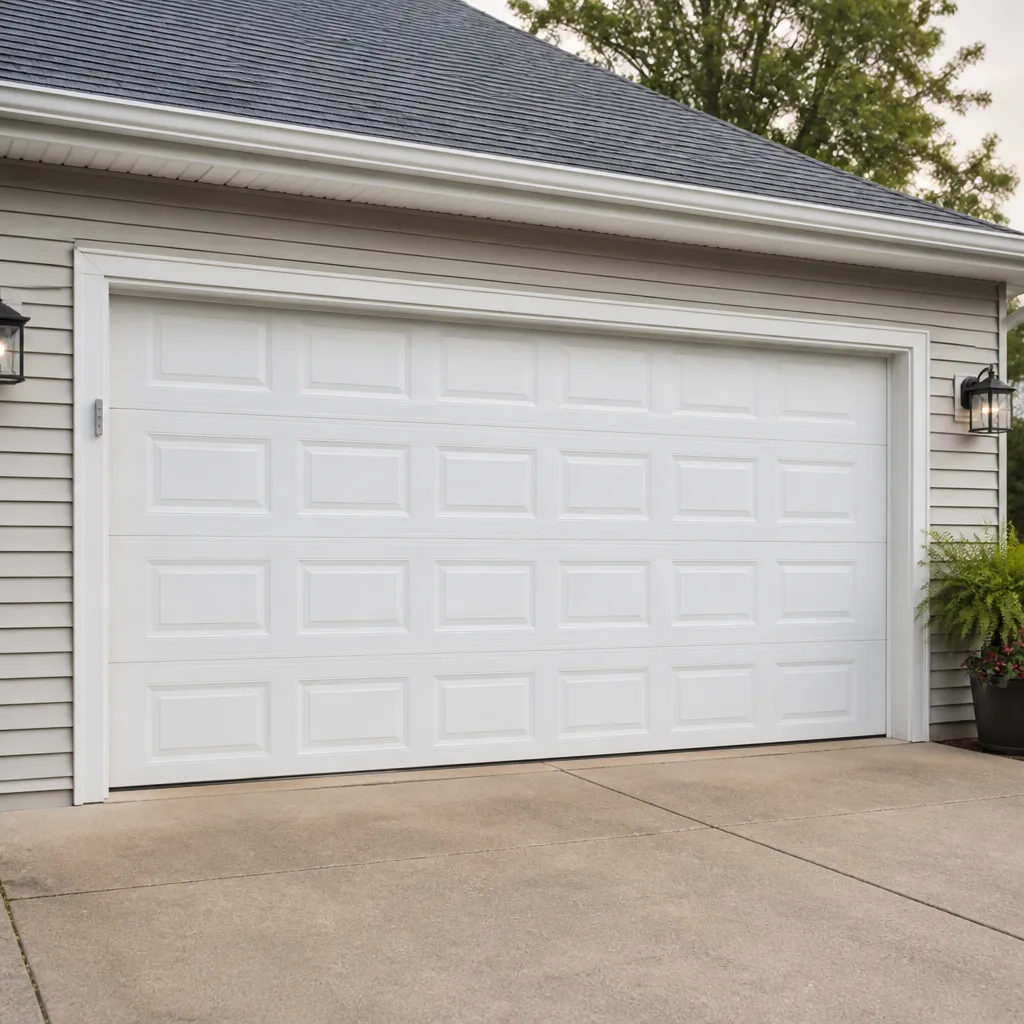 Raised-panel steel
 Carriage house
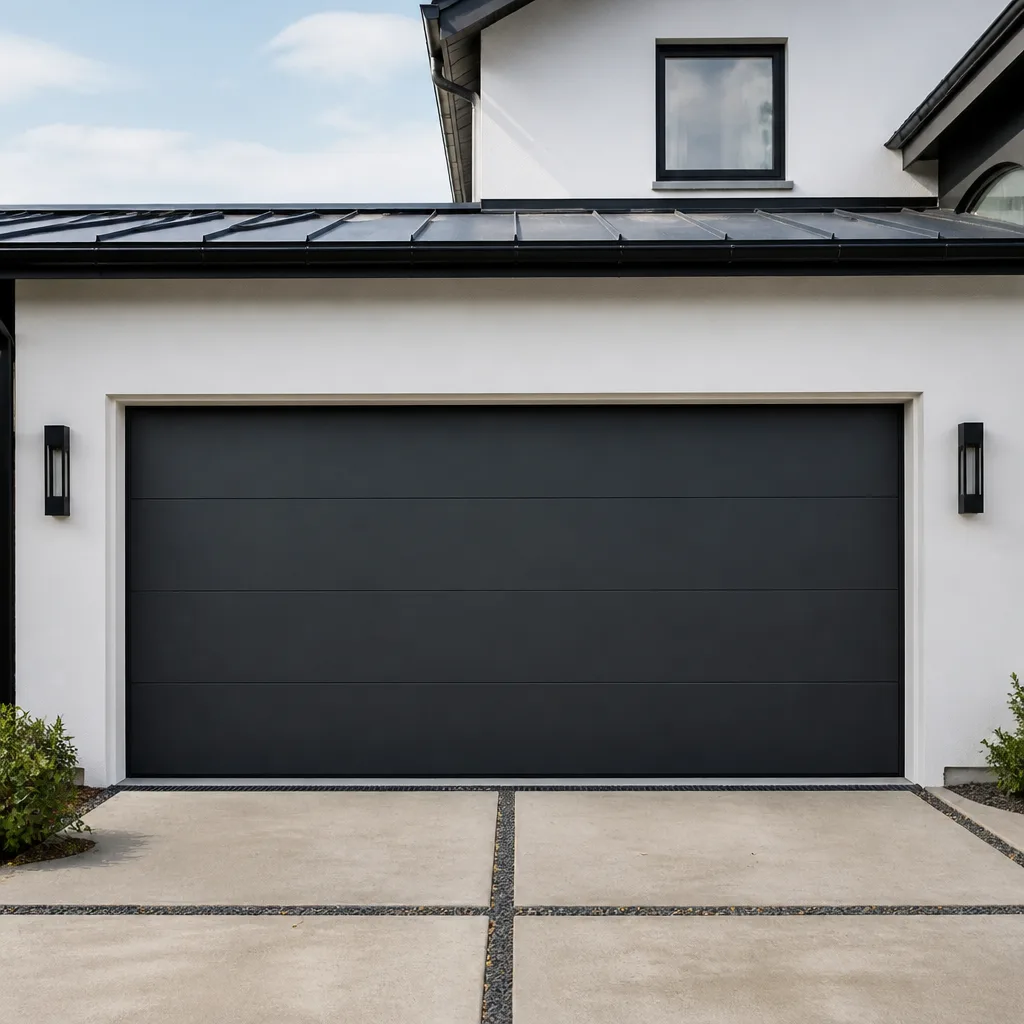 Modern flush
 Full-view glass
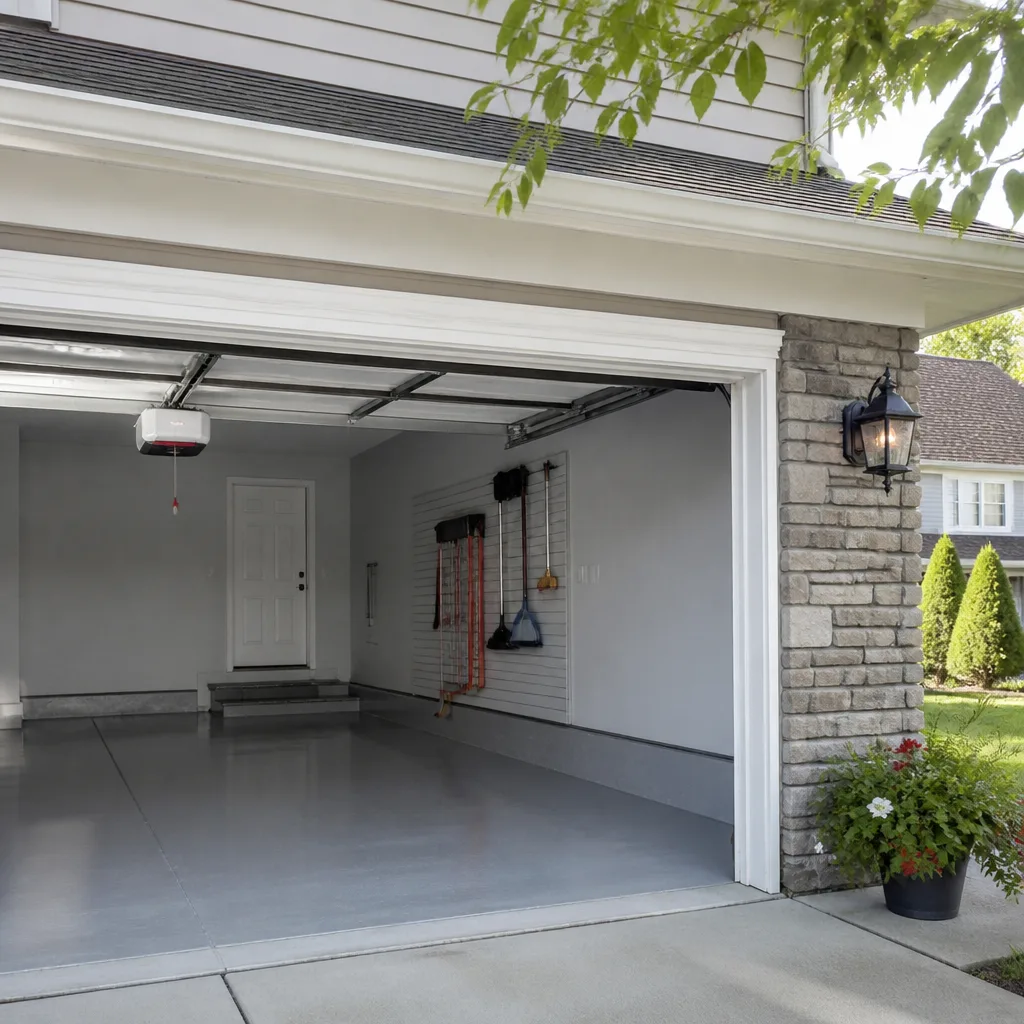 LiftMaster openers
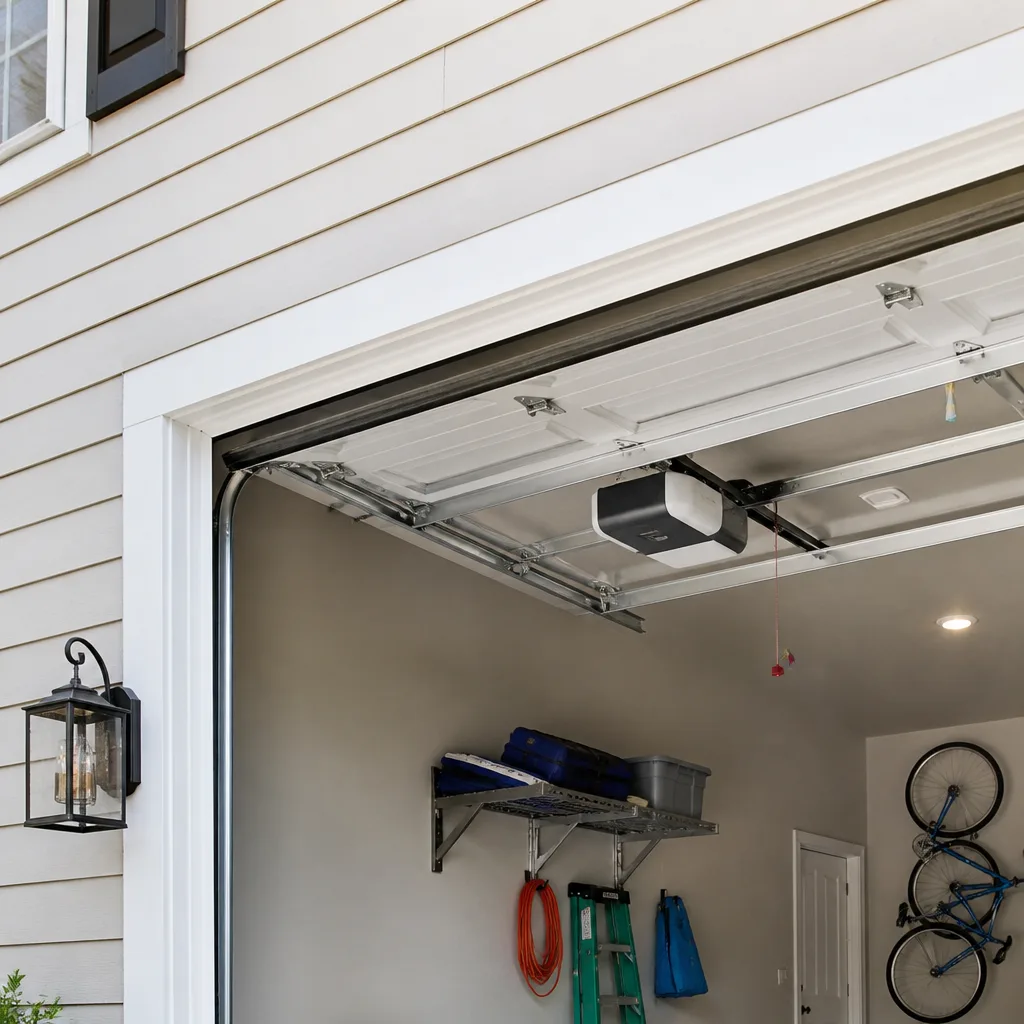 Chamberlain openers
Full 25-point door and opener safety check with every visit - springs, cables, rollers, tracks, and your LiftMaster or Chamberlain opener included
You get a price before we start. It does not change when the pro arrives.
Get your free estimateSeasonal Garage Door Care for Springfield: Year-Round Homeowner’s Guide
Most homeowners assume January cold is what kills garage doors in Springfield. In our experience, the damage happens earlier. The day the Pioneer Valley drops below 20°F for the first time each winter is when springs snap most often, and the reason usually traces back to October: lubricant that dried out on the torsion shaft and hinges and was never replaced. Cold finds every dry friction point at once. This guide covers the two transition windows that produce most of our service calls, the late-October freeze-lock risk and the March thaw-stress period, plus what Connecticut River Valley humidity does to wood panels and opener circuit boards in July and August. You’ll get a month-by-month calendar built around Springfield weather, not generic spring-and-fall advice.
Quick Answer
Seasonal garage door care in Springfield comes down to two dates: service the moving parts before the first sustained freeze in late October, and inspect tracks, thresholds and springs in March when the thaw moves the ground under your slab. Everything else – lubrication in summer, opener checks before the August heat, panel attention in humid months – supports those two windows. Homeowners who handle the October protocol and the March inspection avoid most of the emergency calls that fill up in January and April.
Styles & brands we work with
- Raised-panel steel
- Carriage house
- Modern flush
- Full-view glass
- LiftMaster openers
- Chamberlain openers
Table of Contents
- The October Pre-Freeze Protocol
- Why the March Thaw Is Harder on Your Door Than Winter
- Summer Humidity, Wood Panels and Opener Circuit Boards
- The One Task Before the First August Heat Wave
- Month-by-Month Care Calendar for Springfield
- What You Can Check and What You Shouldn’t Touch
- Brand-Specific Care Notes
- Common Mistakes to Avoid
The October Pre-Freeze Protocol
October is the most important month on the Springfield garage door calendar, and it’s the one most homeowners skip. The work is simple and takes under an hour. Doing it before the first hard freeze is what separates a quiet winter from a snapped spring in January.
Here’s what needs attention before sustained freezing temperatures arrive in the Pioneer Valley:
- Lubricate the torsion shaft, springs, hinges and rollers. Use a garage-door-specific lubricant, not WD-40 or general-purpose oil. Cold thickens the wrong products and thins the right ones out; the goal is a film that stays put below freezing. Dry hinges and rollers are the number one cause of cold-weather failures.
- Test the door balance by hand. Disconnect the opener (pull the release cord) and lift the door halfway. It should stay where you let go. If it drifts down or surges up, the springs are out of adjustment or nearing the end of their life.
- Check the weather seal along the bottom. A hardened or cracked bottom seal lets cold air and meltwater into the gap under the door. On a north-facing Springfield garage, that gap can freeze into a solid block by December.
- Look at the track alignment. Small misalignments that don’t matter in October become binding points when metal contracts in the cold.
- Test the safety reverse. Place a 2×4 flat under the closing door. It should reverse on contact. This is also the time to test the photo-eye sensors on both sides of the opening.
If your door is older than you’d like to guess at, or the springs look rusted, October is a good time to get them looked at rather than waiting for a failure. Our garage door spring repair work picks up sharply once the first cold snap hits, and a pre-season check is always easier than an emergency call at 6am in January.
Why the March Thaw Is Harder on Your Door Than Winter
Winter gets the blame, but the March thaw does more damage to Springfield garage doors than January cold. Three things happen at once: the ground moves under the slab, meltwater finds every gap in the seal, and the door’s metal parts warm and cool repeatedly through freeze-thaw cycles. What held tight in February gets stressed in March.
Frost heave moves the slab, not the door
When the soil under a garage slab thaws, it settles unevenly. The door itself doesn’t move; the floor it meets does. A door that sealed perfectly in December suddenly has a gap on one corner and a scrape on the other. Left alone, the door drags against the frame every time it cycles, which wears the rollers and stresses the opener.
Water intrusion stresses the weather seal
Meltwater pools along the threshold as snowbanks recede. If the bottom seal has any crack or memory loss from the winter, water gets under it and sits against the bottom panel. On steel doors, that’s where rust starts. On wood doors, it’s where the paint fails first.
Track stress and roller wear
Cold-shrunk metal expands in March, and tracks that were slightly off in January become noticeably out of alignment. Binding tracks wear rollers fast. In our experience, the March inspection is what catches a bent track before it turns into a bent panel.
March is also the month when spring fatigue shows up. Cold cycles and repeated freeze-thaw stress don’t break a worn spring instantly; they push a marginal one over the edge. If your door sounds louder in March than it did in November, a garage door repair visit for a spring and roller inspection is worth scheduling before something fails under load.
Summer Humidity, Wood Panels and Opener Circuit Boards
Springfield sits in the Connecticut River Valley, and summer humidity here is a garage door issue, not just a comfort one. Two components feel it most: wood or wood-composite door panels and the opener’s control board.
Wood and composite panels
Wood doors absorb moisture in humid months and dry out in winter, cyclically. Panels that were tight in April can cup, warp or develop hairline cracks at the joints by August. Paint protects against this, but only if it’s intact. If you see paint peeling at the bottom panel or along the edges, moisture is already getting in. Catching that in June or July is easier than refinishing a panel that’s already warped.
Opener circuit boards
Opener motors sit in garages, which are unconditioned and often the most humid room in the house. Circuit boards are affected by ambient moisture, thermal cycling and dust. The most common summer opener symptom we see is a unit that works fine in the morning and refuses to close in the afternoon heat. That’s often a logic board or capacitor issue that shows up under thermal stress. Our garage door opener repair calls in July and August are dominated by this pattern.
LiftMaster and Chamberlain units handle valley humidity well, but no opener is immune. Keeping the garage ventilated where possible, and not leaving the door closed tight through the hottest part of the day if you can help it, both reduce the load on the electronics.
The One Task Before the First August Heat Wave
If you do one thing in July, do this: test the opener’s force setting and inspect the drive system. The first sustained heat wave in August is when the most common summer opener failure surfaces – the door stalls partway down, or the opener runs but the door barely moves. Almost always, the cause traces to a worn drive gear, a stretched belt or chain, or a force setting that’s been quietly drifting.
- Run the door through three full cycles and listen. A chain-drive opener should sound even. A rattle, a grind or a pause mid-travel means something is wearing.
- Check the belt or chain tension. Loose chain slaps and accelerates wear; over-tight chain stresses the motor. Belt-drive units run quieter and are more forgiving here, which is why we recommend them for garages under bedrooms.
- Test the wall control and both remotes. If one remote is flaky and the other works, it’s a remote or battery issue. If both are flaky, it’s the opener’s receiver or logic board.
- Look at the wall mount. The opener hangs from the ceiling on angle iron or straps. Loose mounting turns into vibration, which turns into premature wear.
The task takes fifteen minutes. Doing it before the first 90-degree stretch in Springfield is what prevents the August afternoon call where you can’t get your car out. Genie and Chamberlain belt-drive units are the most common brands we work on for this in Springfield, and a tune-up of the drive system usually resolves the stall before the heat exposes it.
Month-by-Month Care Calendar for Springfield
Generic spring-and-fall advice doesn’t match Springfield weather. Here’s a calendar built around the actual patterns of the Pioneer Valley.
- January: Don’t force a frozen door open. If the seal is stuck to the floor, free it by hand before cycling the opener. Listen for any change in spring tension.
- February: Check that snow and ice aren’t packed against the bottom seal. Clear the threshold after each storm so meltwater has somewhere to go.
- March: Full inspection window. Tracks, seals, spring condition, roller wear. This is the highest-value month on the calendar.
- April: Touch up any paint failures on wood or composite panels before the wet season. Clean and re-lubricate hinges and rollers after winter.
- May: Balance test with the opener disengaged. If it doesn’t hold halfway, spring adjustment is due.
- June: Check the bottom seal for gaps and the threshold for any standing water issues.
- July: Pre-heat-wave opener check – force setting, drive tension, mounting, remotes.
- August: Watch for afternoon-heat opener symptoms and listen for drive-system noise. Note any panel swelling or cupping.
- September: Resume lubrication. Check the safety reverse on both the door and the photo eyes.
- October: The pre-freeze protocol: lubricate, balance, seal, track, safety test. Do this before the first sustained freeze.
- November: Confirm the bottom seal still compresses cleanly. Frozen gaps start here.
- December: Keep the track clear of ice buildup and listen for any new noise on the first cold mornings.
Print it, stick it to the wall inside the garage, and treat the March and October items as fixed appointments. Those are the two dates that prevent the most service calls.
What You Can Check and What You Shouldn’t Touch
Some garage door maintenance is genuinely appropriate for a homeowner. Some of it isn’t. The distinction matters, because the components under the most tension are also the ones that can injure someone seriously.
Safe for homeowners
- Lubricating hinges, rollers and the torsion shaft with a garage-door-specific product.
- Testing the safety reverse and photo eyes.
- Cleaning the tracks and checking for visible bends.
- Testing the balance of the door by hand with the opener disengaged.
- Replacing remote batteries and cleaning the bottom seal.
- Touching up paint on panels.
Not safe for homeowners
Torsion springs and extension springs are stored energy under enormous tension. Adjusting, replacing or removing a torsion spring requires specialized winding bars and the training to use them. The same goes for the cables. A cable or spring that releases under load can cause serious injury, and there’s no safe way to improvise the procedure. If your door is heavy, unbalanced, or the springs are visibly rusted or visibly tired, that’s a job for a trained technician. We provide Garage Door Repair Springfield Pros service across all spring systems, torsion and extension, and we always advise homeowners not to attempt this work on their own.
Electrical and opener electronics
Openers run on household current. Circuit board replacement and wiring aren’t a homeowner task. Diagnostics you can do safely; repairs on the board are a technician’s call.
Brand-Specific Care Notes
Every opener and door has its own maintenance quirks. We work on LiftMaster, Chamberlain, Genie, Clopay, Amarr, Wayne Dalton, Craftsman and Raynor, and the seasonal care notes below come from what we see in the field.
- LiftMaster and Chamberlain: Belt and chain drive systems. The chain tension and drive gear are the highest-wear items in summer heat. Keep the wall control clean to avoid false-trigger issues from stuck buttons.
- Genie: Screw-drive units need different lubrication than chain-drive. Use the manufacturer’s recommended grease, not oil, on the drive screw.
- Clopay: Steel and wood-composite panels. Inspect panel joints and bottom sections in March and again in July, since humidity is the panel’s biggest seasonal stressor.
- Craftsman: Older units are common in Springfield garages. Force settings drift more on these, so the July pre-heat check matters.
If you’re not sure which unit you have, please call before ordering anything. Getting the model right the first time is the difference between one visit and three.
Common Mistakes to Avoid
- Waiting for a break before doing October maintenance. The freeze is what causes the break. Lubricating on the first cold morning is too late – the damage is already set up.
- Using WD-40 or general-purpose oil on the springs and hinges. It thins out and evaporates. In our experience, this is the single most common cause of the January failures we see in Springfield.
- Force-adjusting the opener to compensate for a tired spring. Crank the force setting up and the opener works harder, burns out sooner and can fail the safety reverse. The spring is the problem, not the force setting.
- Skipping the March inspection because “winter is over.” The thaw is when damage shows up. April is when homeowners discover what wasn’t caught in March.
- Ignoring a small gap at the bottom seal. In a Springfield winter, that gap freezes into a solid block and the opener takes the load instead.
- Leaving paint failures on wood doors through summer. Humidity gets in through any paint crack. Warping in August traces back to an unpainted joint in June.
- Trying to adjust a torsion spring yourself. The stored energy can injure seriously. This is one of the few homeowner tasks that has no safe DIY version.
See the difference
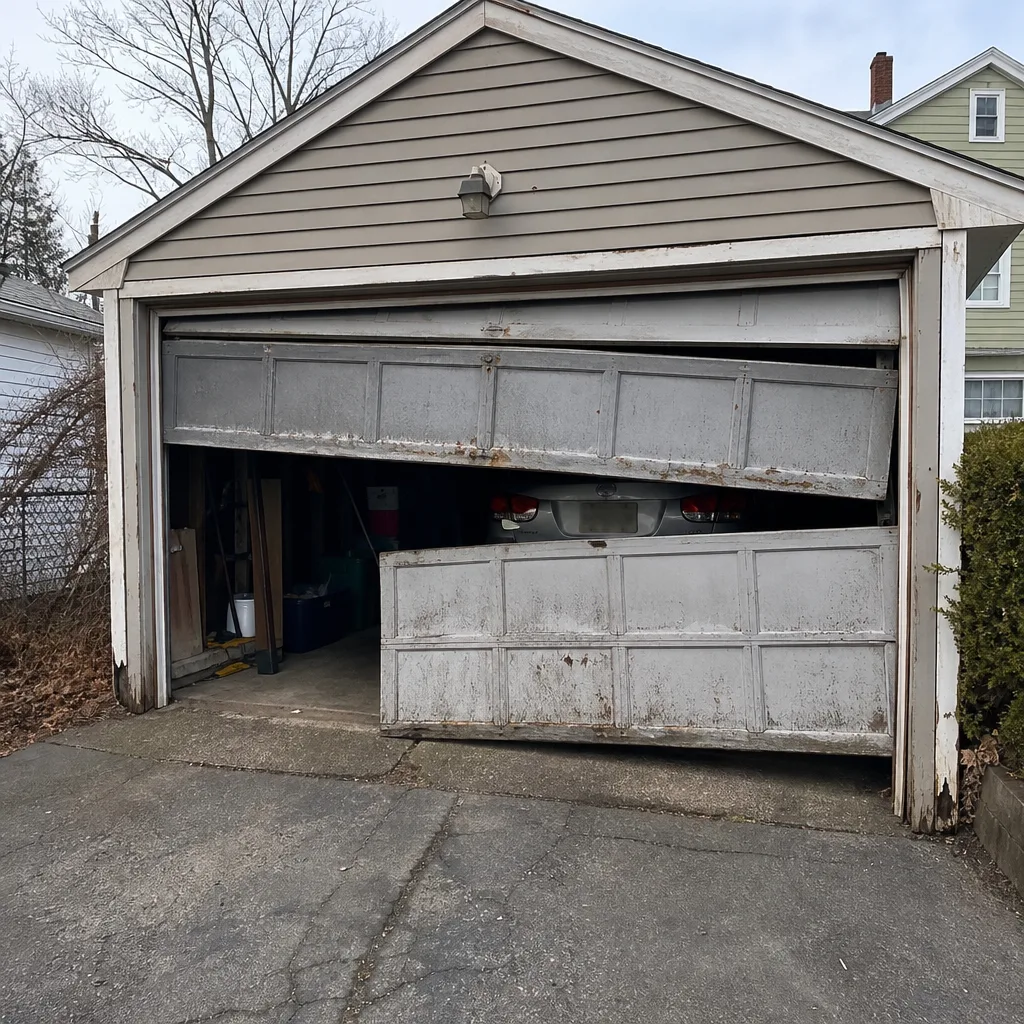 Before
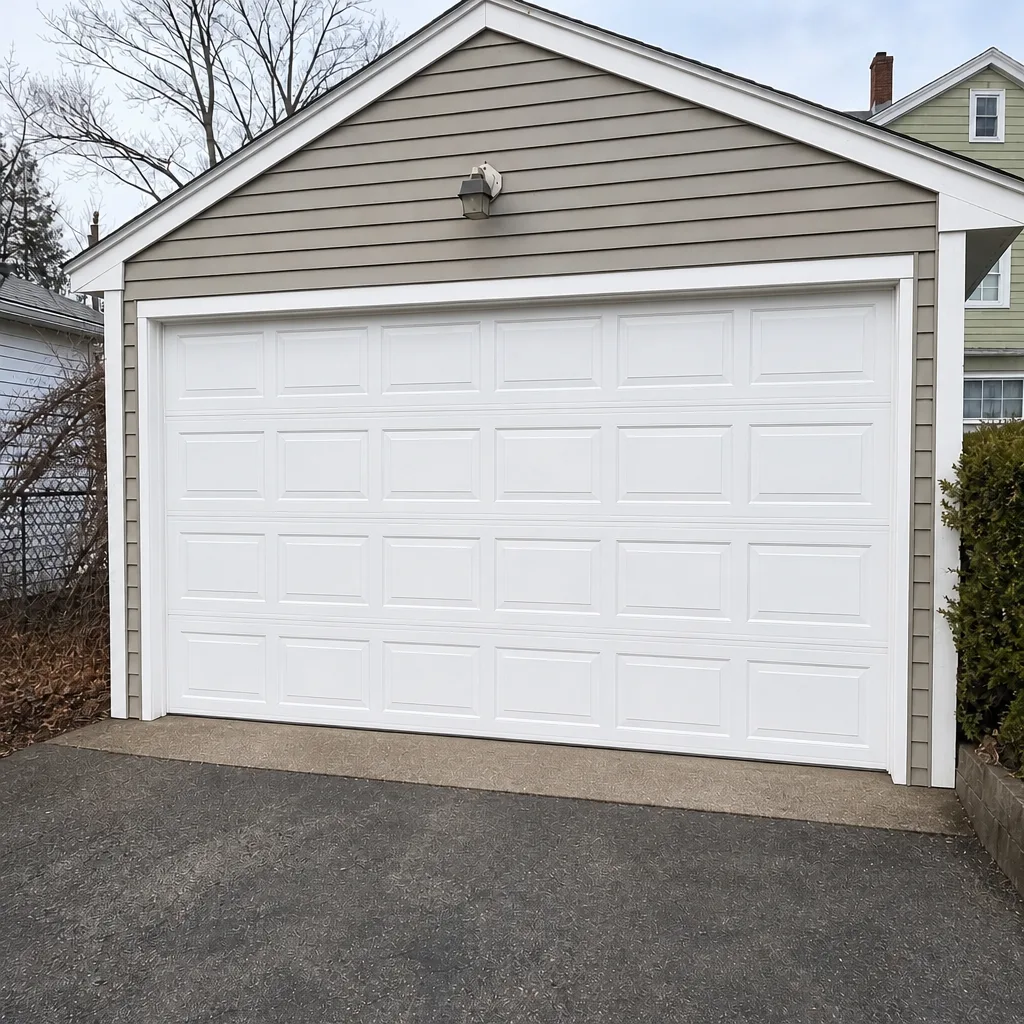 After
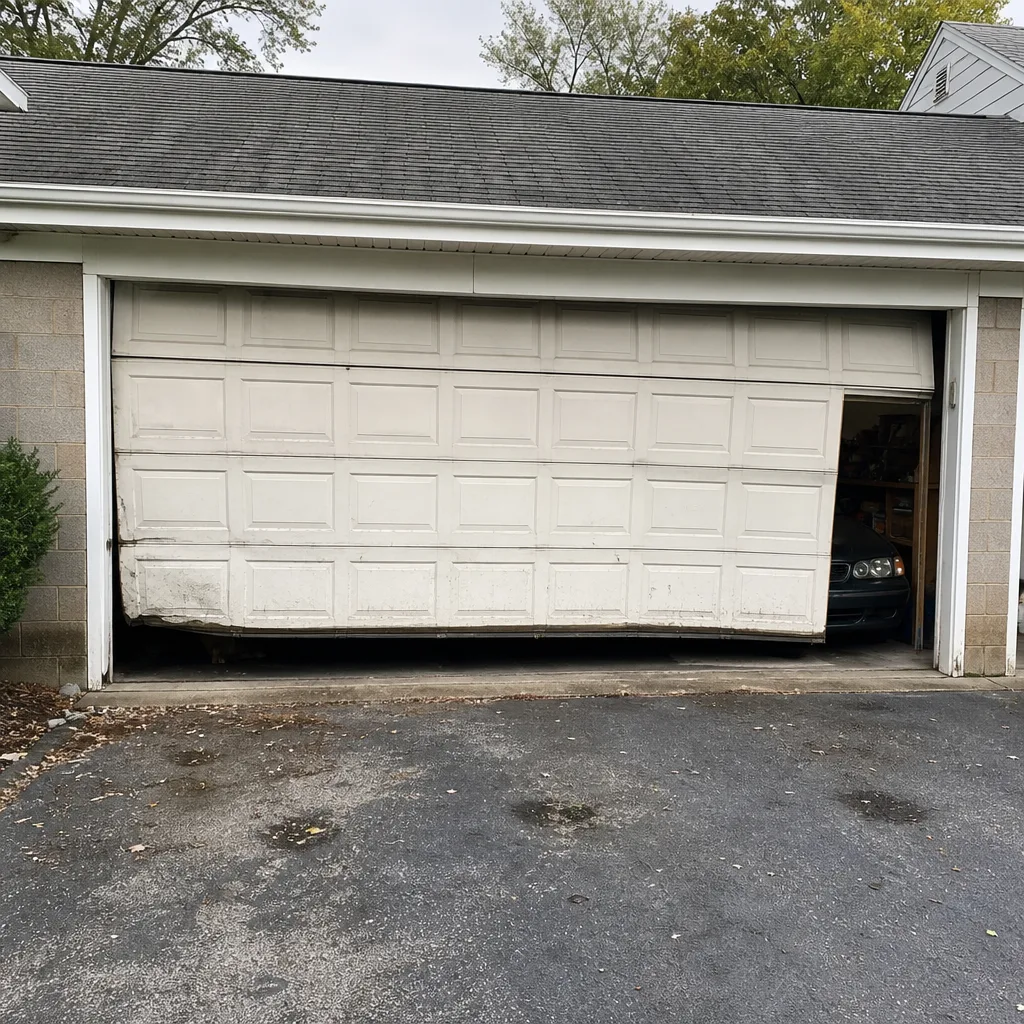 Before
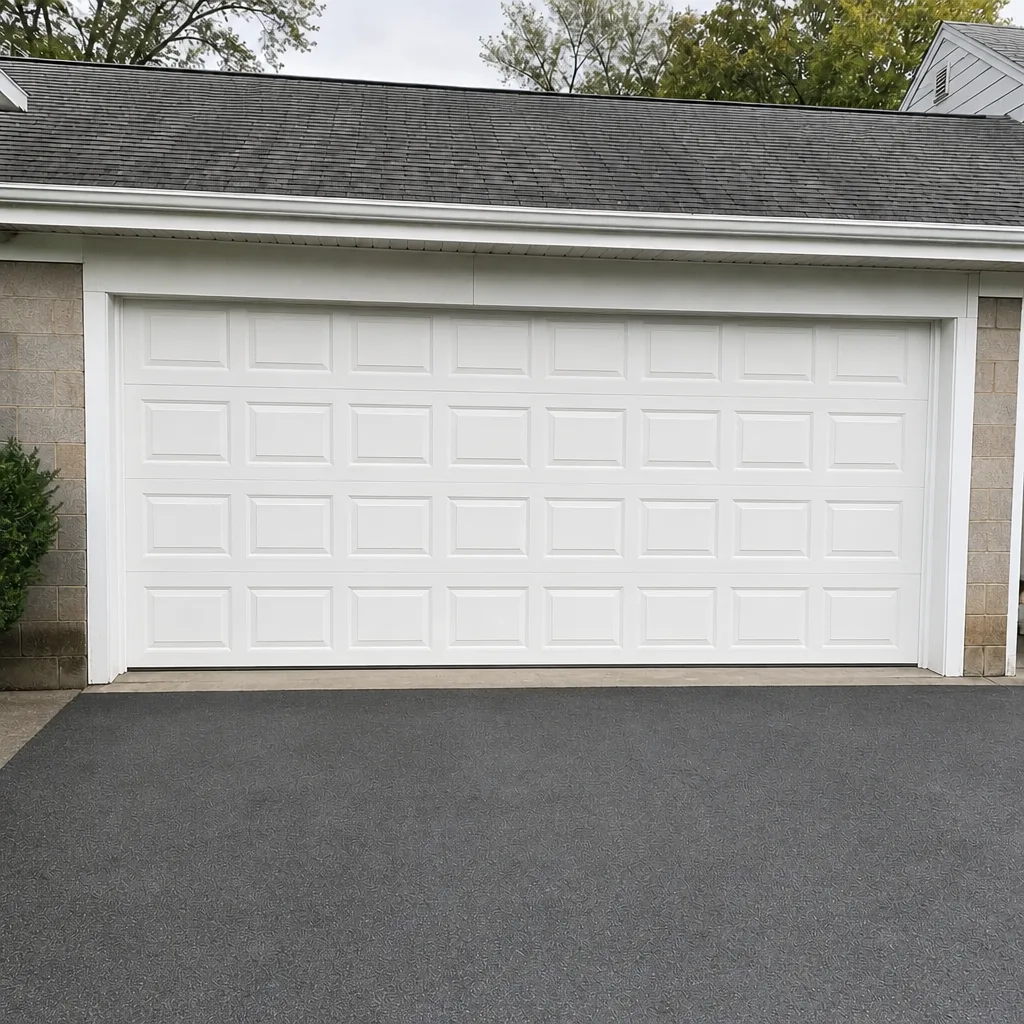 After
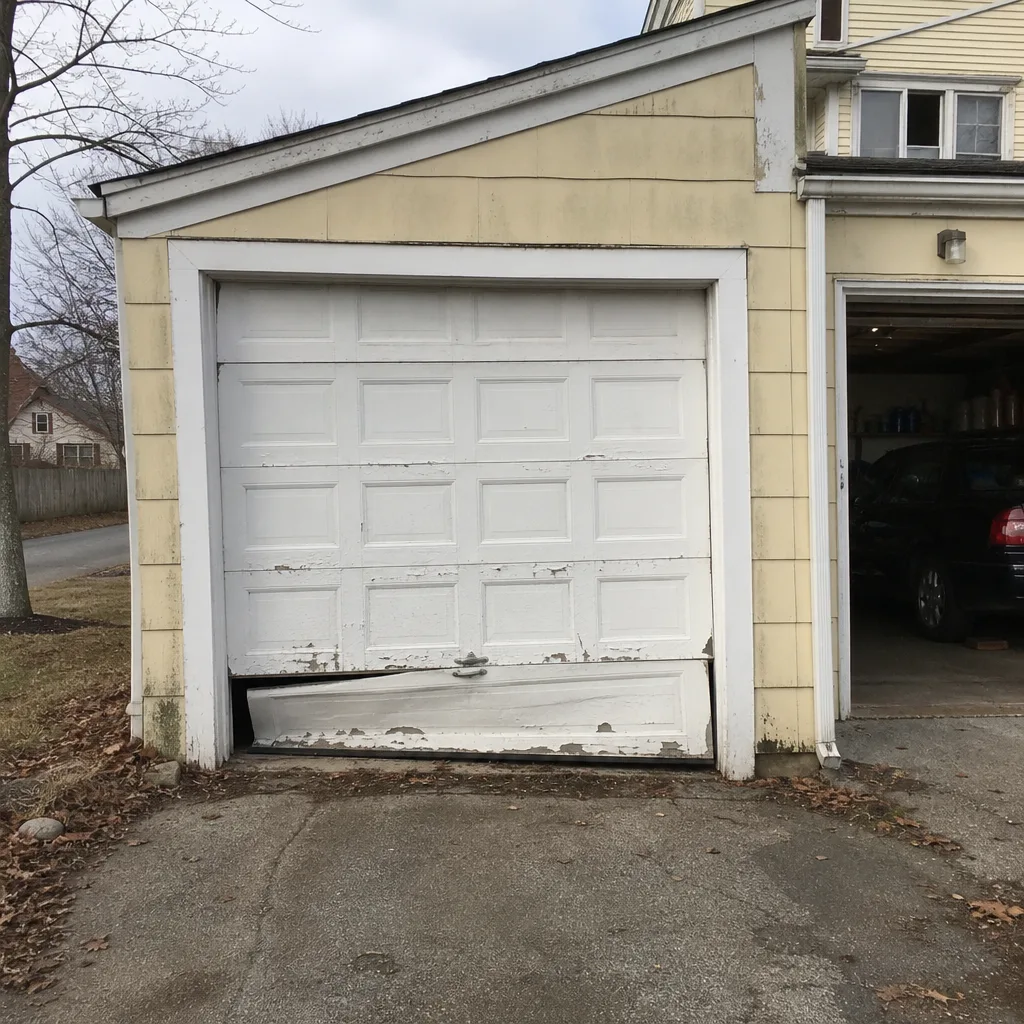 Before
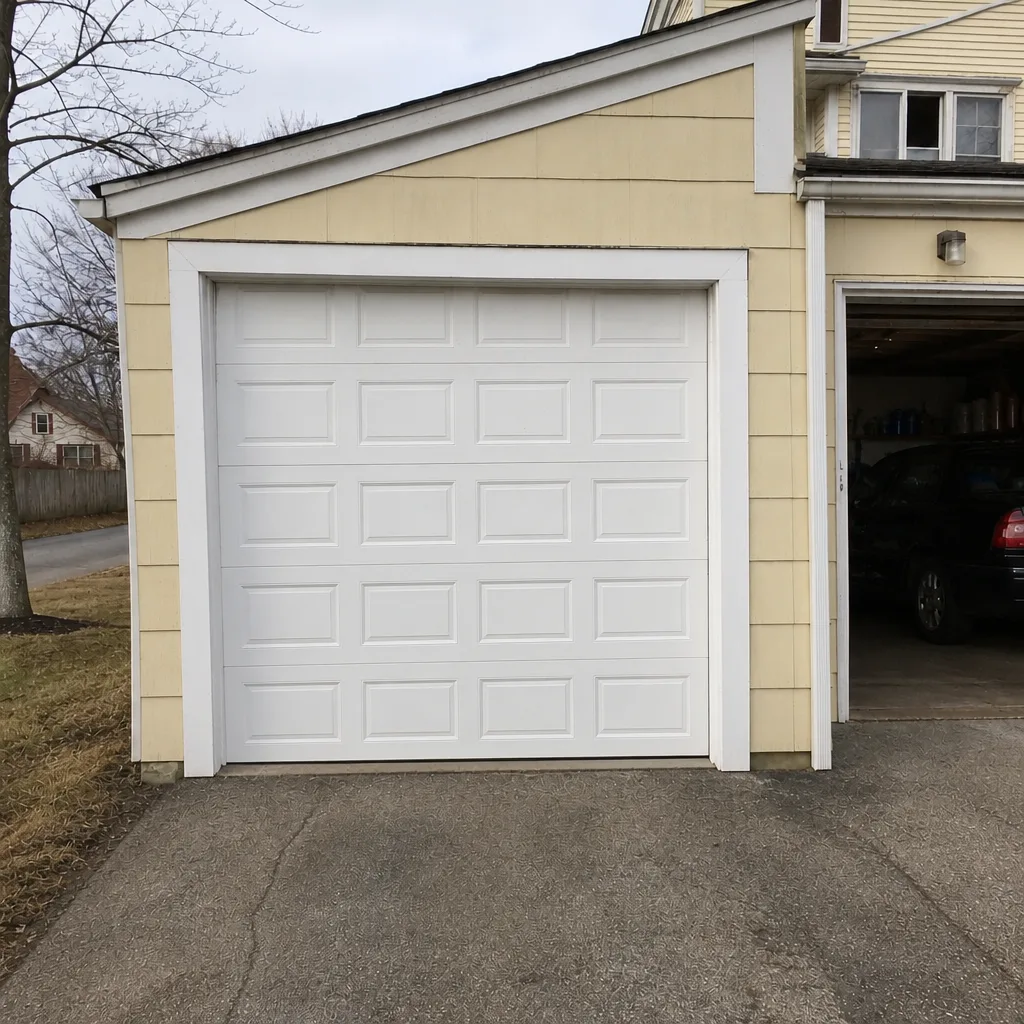 After
When to Call a Professional
Call a garage door specialist when the door is heavy to lift by hand, when springs look rusted or the door slams down instead of hanging, when a track is visibly bent, when the opener stalls partway through a cycle, or when the safety reverse fails. Call when the door is stuck open and you can’t secure the house; that’s what emergency service is for, and we offer it because a broken door left open overnight is a security gap. Call before the first freeze if your door is louder than it was last season. And call if you’re not sure – a two-minute conversation is cheaper than a technician visit for something obvious. Garage Door Repair Springfield Pros offers free estimates in Springfield. Call (866) 412-1607 to schedule a seasonal check or an emergency visit.
Frequently Asked Questions
Lubricate in October before the first sustained freeze and again in September as a pre-season check. In our experience, the October application is the one that prevents winter failures, because dry hinges and rollers in cold weather are the top cause of January spring problems in the Pioneer Valley. If you’ve already had a cold snap and haven’t lubricated, do it now.
March thaw stress does more damage than January cold because the ground moves under the slab. Frost heave creates seal gaps and track misalignment, meltwater finds any crack in the bottom seal, and metal parts cycle through repeated freeze-thaw. The result is often a spring that was hanging on in February finally failing in March. Contact us at (866) 412-1607 for a thaw inspection – estimates are free.
Yes, specifically on wood and wood-composite panels. Valley humidity causes panels to absorb moisture and swell, then dry out in winter and shrink. That cycling cups and warps panels and cracks paint at the joints. Steel doors are less affected but aren’t immune, since the bottom panel is where water intrusion hits hardest.
A seasonal inspection is typically quoted with the estimate before any work is done, and the written price we give you is the final price. If the technician finds a worn spring or a track that needs adjusting, the cost is quoted as a separate line item before anything is touched. Call (866) 412-1607 for an exact quote – estimates are free.
For genuine emergencies – a spring that snaps and leaves the door stuck open or unusable – we offer emergency garage door service for same-day response where possible. If you hear a loud bang from the garage and the door won’t lift, stop using the opener and call us. The sooner we’re there, the sooner the door is secure. Call (866) 412-1607 and we’ll do what we can to get someone out that day.
That’s a thermal-stress symptom, usually either a failing logic board or a capacitor that misbehaves at high temperature. A drive system in poor condition also stalls when heat increases belt or chain friction. We work on LiftMaster, Chamberlain, Genie and other major openers and can diagnose the specific cause in one visit rather than replacing parts one at a time.
The Bottom Line
Springfield’s two dangerous transition windows, the late-October freeze-lock risk and the March thaw-stress period, are where most garage door problems start and where most emergency calls come from. Handle October with a proper lubrication pass and a balance test. Handle March with a full inspection of tracks, seals, rollers and springs. Keep the opener drive checked in July, watch your wood panels in August, and don’t touch the torsion springs yourself. The work you prevent is easier than the work you do after a failure. If you’d rather have a technician walk through the whole seasonal checklist once, our team at Garage Door Repair Springfield Pros covers it in a single visit, with up to 12 years of experience on staff, and offers free estimates across the Pioneer Valley.
Call (866) 412-1607 for your free estimate and to schedule seasonal service in Springfield. Emergency calls are welcome, and the price is quoted and agreed before any work starts.
Written by the team at Garage Door Repair Springfield Pros.