Last updated November 21, 2026
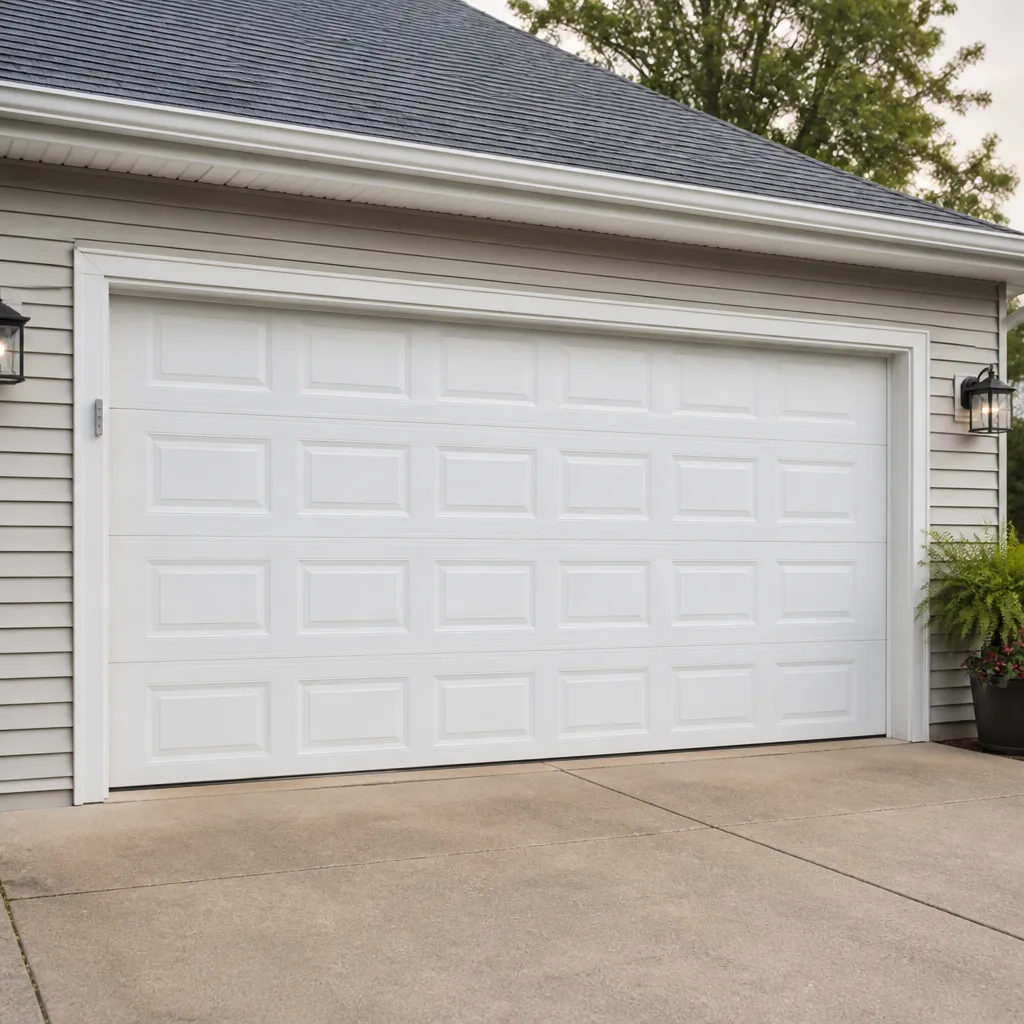 Raised-panel steel
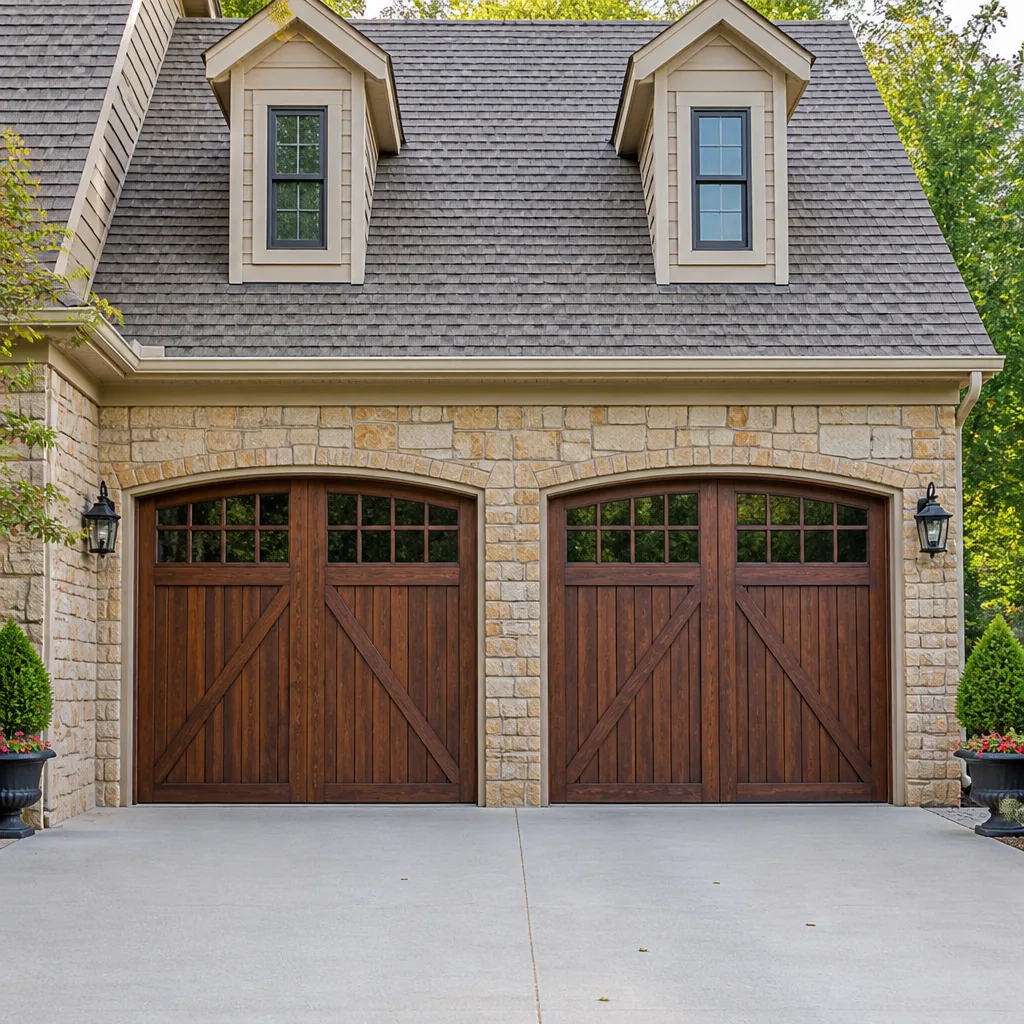 Carriage house
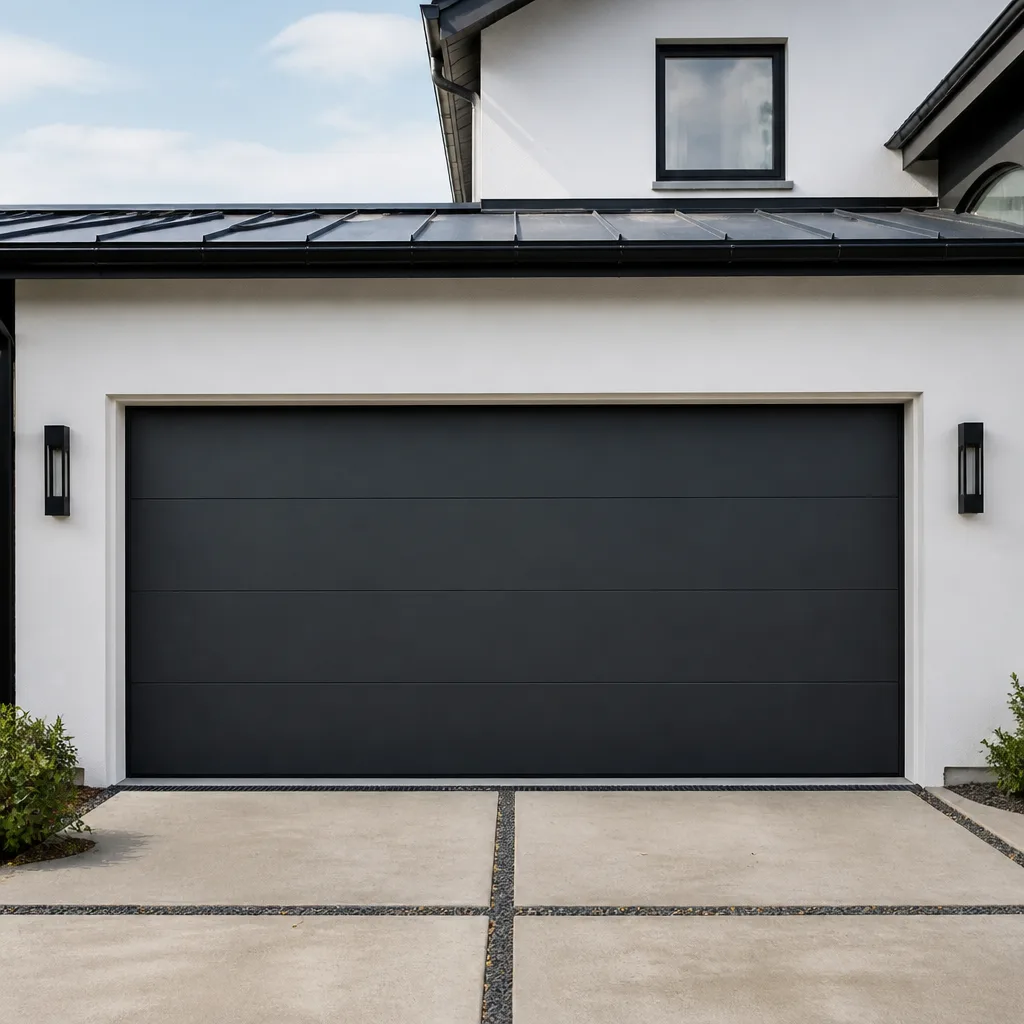 Modern flush
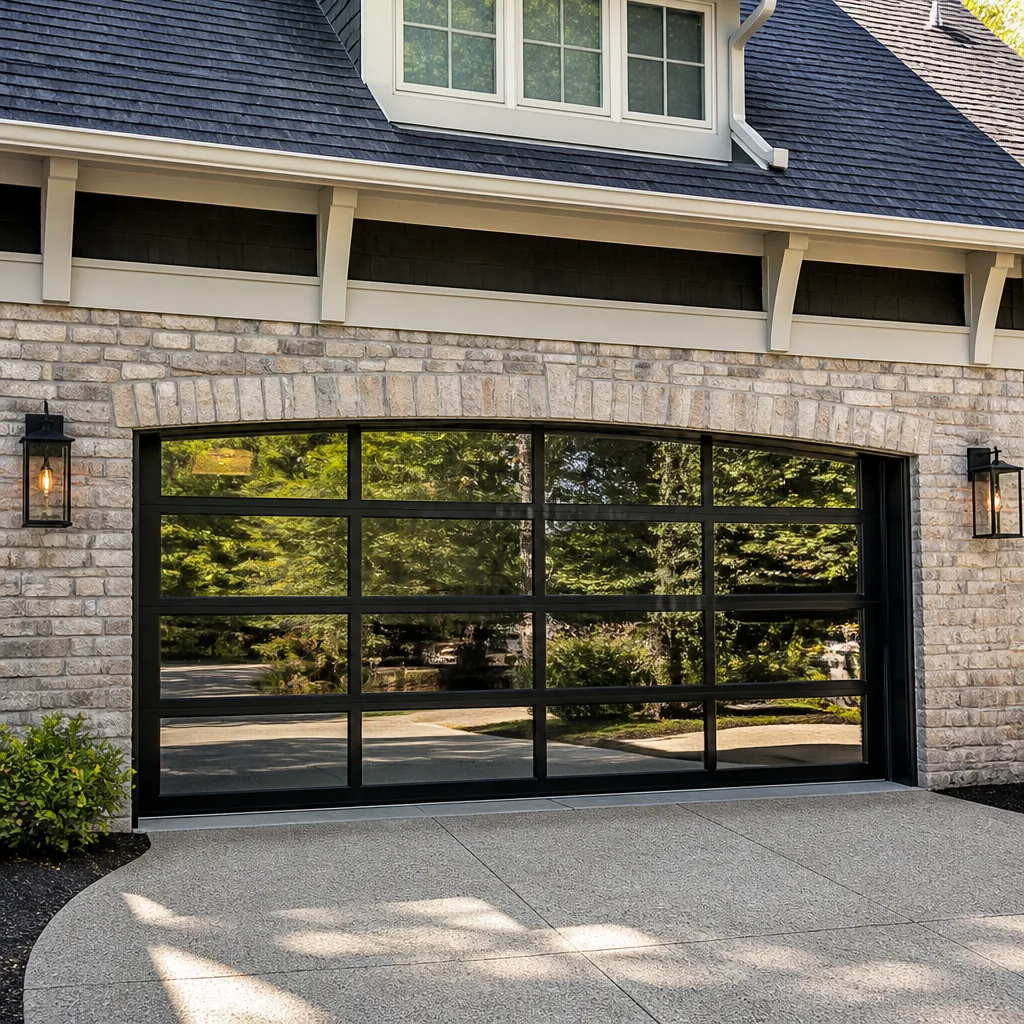 Full-view glass
 LiftMaster openers
 Chamberlain openers
Full 25-point door and opener safety check with every visit - springs, cables, rollers, tracks, and your LiftMaster or Chamberlain opener included
You get a price before we start. It does not change when the pro arrives.
Get your free estimateDIY vs Professional Garage Door: The Springfield Homeowner’s Decision Guide
Most garage door advice splits into two useless camps: “never touch it” or “YouTube it.” Neither helps. The truth is that a garage door is a stack of parts with wildly different risk levels, and the line between safe DIY and the jobs that put people in the emergency room runs through the middle of the door, not around it. Painting your panels is a weekend project. Winding a torsion spring that’s holding several hundred pounds of stored force is a different category of task entirely. This guide gives you a component-by-component risk map for Springfield homeowners, so you know exactly which jobs you can take on and which ones to hand off.
Quick Answer
Cosmetic and observational work on a garage door – painting, cleaning, lubricating, testing the balance, replacing a remote battery – is genuinely safe to do yourself. Anything that involves spring tension, cables under load, track alignment on a door that’s off-level, or electrical work inside the opener is a professional job, no exceptions. In Springfield, the smart middle ground is to do the prep and inspection yourself, then pay a specialist for the mechanical work.
Styles & brands we work with
- Raised-panel steel
- Carriage house
- Modern flush
- Full-view glass
- LiftMaster openers
- Chamberlain openers
Table of Contents
- The Springfield DIY Risk Chart: 15 Tasks, Three Clear Answers
- Why Torsion Springs Have No DIY Version
- What DIY-Able Tasks Actually Require, and What You Can Find in Springfield
- Warranty and Insurance Consequences of Self-Performed Work in Massachusetts
- How to Be a Smart DIYer: Prep Work That Cuts Your Bill
- Springfield Climate, Housing Stock, and Your Garage Door
- Opener, Door, or Both? Matching the Job to the Skill
- Safety Rules That Apply to Every Garage Door in Springfield
The Springfield DIY Risk Chart: 15 Tasks, Three Clear Answers
This is the core of the guide. We’ve broken the most common garage door jobs into three buckets: yes (safe for a careful homeowner), maybe (doable with the right tools and some patience), and no (call a professional). The distinction isn’t about how hard the task feels. It’s about what happens when something goes wrong.
Yes: Safe for DIY
- Painting or staining door panels. Cosmetic, low risk, and a good Saturday project. Prep and dry time matter more than technique.
- Cleaning tracks and rollers. A rag, a mild cleaner, and a few minutes per track. No load involved.
- Lubricating hinges, rollers, and springs. A garage-door-specific lubricant on the moving points reduces noise and wear. Most hardware stores in Springfield carry it.
- Replacing remote batteries and re-pairing remotes. A manual and five minutes. Every major brand including LiftMaster and Chamberlain has a pairing procedure in the owner’s guide.
- Testing the safety reverse. Put a piece of wood in the door’s path and see if it reverses. This is a check, not a repair, and you should do it regularly.
- Testing the door balance. Disconnect the opener and lift the door halfway by hand. It should hold. If it drops or rises on its own, the spring system needs attention.
- Visually inspecting cables, springs, and rollers. Look for fraying, rust, or gaps. You’re looking, not touching.
- Tightening exposed hinge bolts and bracket screws. Hand tools only, no impact driver, and stop if you feel resistance.
Maybe: Depends on Tools and Confidence
- Replacing weatherstripping and bottom seals. Straightforward on most doors, but the bottom seal on some older doors is held by a retainer that needs the door raised and blocked.
- Replacing a photo-eye sensor pair. Mostly plug-and-play on newer openers, but wiring routing and alignment take patience.
- Adjusting opener travel limits and force settings. Doable from the manual, but a wrong setting can cause the door to reverse at the wrong point or slam shut.
- Replacing a wall-mounted opener button or keypad. Safe electrical work on low-voltage wiring, but identify the right circuit before you start.
No: Call a Professional
- Replacing torsion or extension springs. The spring stores enough energy to break a wrist or take out an eye. Covered in detail below.
- Replacing cables or drums. These are under the same tension as the springs. If a cable is frayed, stop using the door and call.
- Realigning a bent or off-track door. A door that’s come out of its track can fall. It’s also a sign of a deeper problem.
- Replacing panels on a damaged door. Panel replacement requires matching the manufacturer’s model and safely supporting the door during the swap.
If you’re not sure which bucket your job falls into, that’s a good sign it belongs in the third one. Our garage door repair team can tell you over the phone whether what you’re describing is a homeowner job or a technician job.
Why Torsion Springs Have No DIY Version
A torsion spring is a tightly wound coil of steel mounted above the door. The installer winds it so that when the door is down, the spring is holding a huge amount of rotational energy. That stored energy is what makes the door feel light when you lift it. When the door is up, the spring is mostly unwound and the door’s weight is carried by the track and the opener.
The problem is the transition. When you wind or unwind a torsion spring, you’re holding that stored energy with two steel rods inserted into the winding cones. If a rod slips, the spring releases its energy in a fraction of a second. There’s no warning, no slow failure, and no way to get out of the way in time. This isn’t a skill issue. Even experienced technicians get hurt when a rod slips, which is why the trade treats spring work as the most dangerous part of the job.
What the job actually involves
- Identify the spring’s wire gauge, inside diameter, and length. These numbers must match exactly, or the door will be unbalanced or dangerous.
- Order the correct spring. Most hardware stores in Springfield don’t stock specialty spring sizes, so this is usually a supplier order.
- Clamp the door in the open position so it can’t drop.
- Unwind the old spring using two winding rods in a controlled sequence, alternating sides.
- Remove the spring, install the new one, and re-wind to the correct number of turns based on door height and spring size.
- Test the balance, adjust the turns if needed, and check the opener’s force settings.
Every step in that list has a failure mode that can injure someone. The winding rods alone are a specialty tool – most hardware stores don’t carry them, and the ones that do carry a lighter version that isn’t suited to full-size torsion springs. This is why garage door spring repair is the one service we tell every homeowner to call for, regardless of how handy they are. Spring repair done safely, done right, is a trained-professional job. Our technicians have up to 12 years of experience with both torsion and extension spring systems.
One more thing: a broken spring is not a “wait until next week” problem. A door with a broken torsion spring is being held up by the opener alone, which will burn out the opener’s gears quickly. A door with a broken extension spring can drop suddenly. If you hear a loud bang from the garage and the door won’t lift, stop using the opener and call for emergency service.
What DIY-Able Tasks Actually Require, and What You Can Find in Springfield
Here’s what most DIY guides skip: even the “safe” tasks have a tool requirement, and in Springfield some of those tools are easier to find than others. Knowing what you can buy locally versus what you’d need to order saves a wasted trip.
Tools you can find in Springfield
- Adjustable wrenches, socket sets, and screwdrivers – any hardware store or big-box retailer in the city.
- Garage-door-specific lubricant – most hardware stores carry a silicone or lithium spray labeled for garage doors.
- Replacement remotes and keypads for LiftMaster, Chamberlain, and Craftsman openers – widely available, though matching the exact model takes a quick check of the opener’s label.
- Bottom seal and weatherstripping – common sizes are stocked, but older or odd-sized doors often need a special order.
- Photo-eye sensor pairs – common brands are stocked at most hardware stores.
Tools that are usually a special order
- Winding rods sized for full torsion springs – not a typical hardware store item, and the lighter versions sold online aren’t rated for it.
- Springs in a specific wire gauge and length – most stores stock a few common sizes, which almost never match what your door needs.
- Cables and drums sized to your door’s weight – these are matched to the door, not interchangeable.
- Panels for a specific manufacturer’s model – matching finish, profile, and window configuration usually means ordering from the manufacturer.
That gap between “available locally” and “special order” is the practical reason so many Springfield homeowners end up calling a professional partway through a project. The tool cost for the mechanical work usually exceeds the cost of having it done, and the leftover specialty tools sit in the garage afterward. If you’re weighing that math, a free estimate is cheaper than a shopping list.
Warranty and Insurance Consequences of Self-Performed Work in Massachusetts
The hidden cost of DIY garage door work isn’t the tool bill. It’s what happens after the door fails and causes damage to your house, your car, or a neighbor’s property.
Most garage door manufacturers set warranty terms that assume installation and repair by a qualified technician. Self-performed work on springs, cables, or the opener can void the warranty on the affected parts, which means a door that fails six months later is your cost to fix. The same logic applies to openers – a LiftMaster or Chamberlain opener installed or modified outside the manufacturer’s instructions may lose coverage on the opener and its accessories.
Homeowner’s insurance is a separate question, and the answer depends on your policy. Most policies cover sudden accidental damage, but they also ask how the damage happened. A door that fell because a spring was wound incorrectly is a different claim than a door that fell because a cable snapped from age. Reporting the first one honestly may lead to a coverage dispute. The safest approach is to keep records: who did the work, when, and what parts were used. If you do a task yourself, keep the receipts and the manual. If a professional does it, keep the invoice.
In Massachusetts, a garage door is generally treated as part of the home’s structure for insurance purposes, and the door’s condition can factor into a claim involving vehicle damage or injury. That’s another reason spring and cable work belongs in professional hands – not because DIY is illegal, but because the paper trail and the warranty terms both favor documented professional work on the highest-risk components.
How to Be a Smart DIYer: Prep Work That Cuts Your Bill
You can save real money on a professional repair without touching a single spring. The work that takes a technician the longest isn’t always the repair itself; it’s the diagnostic and setup time. If you do that part, the visit gets shorter and the bill usually reflects it.
The prep checklist
- Clear the garage floor. Technicians need space around the door and under the tracks. A cleared bay saves 10-15 minutes of moving boxes.
- Write down the door’s model and the opener’s model. Both labels are usually inside the garage – one on the door’s end stile, one on the opener’s motor housing. This is the single biggest time-saver, because it lets the technician confirm parts before the visit.
- Describe the symptom precisely. “The door goes up a foot and stops” points to a different problem than “the door closes but the light flashes.” Take a short video of the door in motion if you can.
- Test the balance. Disconnect the opener and lift the door halfway. If it stays put, the springs are holding. If it falls, the spring system needs attention.
- Test the safety reverse. Put a piece of wood in the door’s path and see if the door reverses. If it doesn’t, that’s an urgent safety issue.
- Note any noises. A grinding, popping, or scraping sound tells a technician where to look first.
- Check the photo-eye sensors. Look for a steady light on each sensor. A blinking light usually means misalignment or a dirty lens.
If you can hand a technician the model numbers and a clear description of the problem, you’ve already shortened the visit. That’s the version of DIY that actually pays off: measure, observe, and document, then let the specialist handle the mechanical work. It’s also the version that fits neatly with garage door opener repair, since opener problems often look like door problems and vice versa.
Springfield Climate, Housing Stock, and Your Garage Door
Springfield gets real winter – freezing nights, snow load on the roof, and a freeze-thaw cycle that works on every moving part of a garage door. That matters for the DIY question because the season changes which tasks are worth doing yourself.
In winter, metal contracts and the lubrication on hinges and rollers thickens. A door that ran quietly in October starts to groan in January. The fix is usually a fresh application of garage-door lubricant, which is a DIY task. But the same cold makes springs more brittle, and a spring that’s been slowly weakening for years is more likely to fail during a cold snap. If your door is struggling to lift in February, don’t assume it’s just the cold – test the balance before you blame the weather.
Springfield’s housing stock ranges from older homes with single-car doors to newer construction with wider double doors and higher-lift tracks. Older doors often have extension springs, which run alongside the tracks, while newer doors usually have torsion springs above the door. The two systems fail differently and are repaired differently. Knowing which one your door uses is useful prep: extension springs are easier to identify visually, and their failure mode (a loud snap and a door that won’t lift) is more obvious. Torsion springs fail with a bang too, but the door may still feel liftable by hand until you test the balance.
Snow and ice also matter for the bottom seal. A seal that’s torn or compressed lets meltwater into the garage, which rusts the bottom panel and the track. Replacing a bottom seal is a maybe-level DIY task, but if the seal has been bad for several winters, the damage may already be in the panel. That’s worth a look before you order a seal.
Opener, Door, or Both? Matching the Job to the Skill
A lot of Springfield homeowners call with one problem and find out it’s another. The door and the opener are two systems that work together, and a symptom on one side often traces back to the other. Knowing which is which saves you from paying for the wrong repair.
Symptoms that point to the door
- The door is hard to lift by hand with the opener disconnected.
- The door sags on one side or looks uneven when closed.
- The door comes off the track or binds in one spot.
- You hear a loud bang from the garage and the door won’t lift.
- The door drifts down on its own after you lift it halfway.
Symptoms that point to the opener
- The motor runs but the door doesn’t move.
- The door reverses immediately after closing, with the light flashing.
- The remote works intermittently or only from close range.
- The opener’s light flickers or the unit beeps without moving.
- The wall button works but the remote doesn’t (or the reverse).
When both systems are involved, a single visit from a technician who handles both saves a second call-out. That’s the practical argument for a garage-door-only specialist over a general handyman: the opener and the door get diagnosed together, and the repair is done once. We’re certified to work on eight major brands – LiftMaster, Chamberlain, Genie, Clopay, Amarr, Wayne Dalton, Craftsman, and Raynor – so the odds are good that the equipment in your garage is one we work on regularly.
Safety Rules That Apply to Every Garage Door in Springfield
Some safety rules apply regardless of who does the work. These are the ones worth taping to the wall.
- Never stand under a door that’s being tested or adjusted. Stand to the side, and keep kids and pets out of the garage during any work.
- Never disable the safety reverse. If it’s not working, that’s a repair, not a setting to change.
- Never leave a door with a broken spring in the up position. The door can drop without warning.
- Never touch a cable that’s under tension. A frayed cable can snap and whip.
- Never use a door that’s off its track. Stop using the opener and call for service.
- If a spring breaks, don’t try to open the door manually. The door’s weight is no longer supported.
If you’re ever unsure whether a situation is safe, call. A phone call is free, and the answer is quicker than a trip to the emergency room.
Common Mistakes to Avoid
- Assuming “it still opens” means “it’s fine.” A door with a weakening spring will keep working until it doesn’t, and the failure usually happens when the door is fully loaded. Test the balance every few months instead of waiting for a symptom.
- Buying a spring off the shelf without matching the specs. Wire gauge, inside diameter, and length all have to match the door’s weight. A mismatched spring can overload the opener or leave the door unbalanced, and most Springfield hardware stores don’t stock the size you need anyway.
- Using WD-40 on the tracks. It attracts dust and grit, which makes the rollers wear faster. Use a garage-door-specific lubricant on the moving parts, and keep the tracks themselves clean and dry.
- Adjusting the opener’s force settings to compensate for a stiff door. Turning up the force masks the real problem and puts more strain on the opener. If the door is stiff, the door needs attention, not a stronger motor.
- Disconnecting the opener and forgetting to reconnect the safety reverse. After any manual testing, re-engage the opener and re-test the reverse before the door goes back into daily use.
- Ignoring a door that reverses for no reason. Intermittent reversing is usually a photo-eye or travel-limit issue, and it gets worse in cold weather. Have it checked before it becomes a door that won’t close at all.
- Letting a small panel dent go unaddressed through a Springfield winter. A dented panel can trap water and rust through, which turns a cheap cosmetic fix into a panel replacement.
See the difference
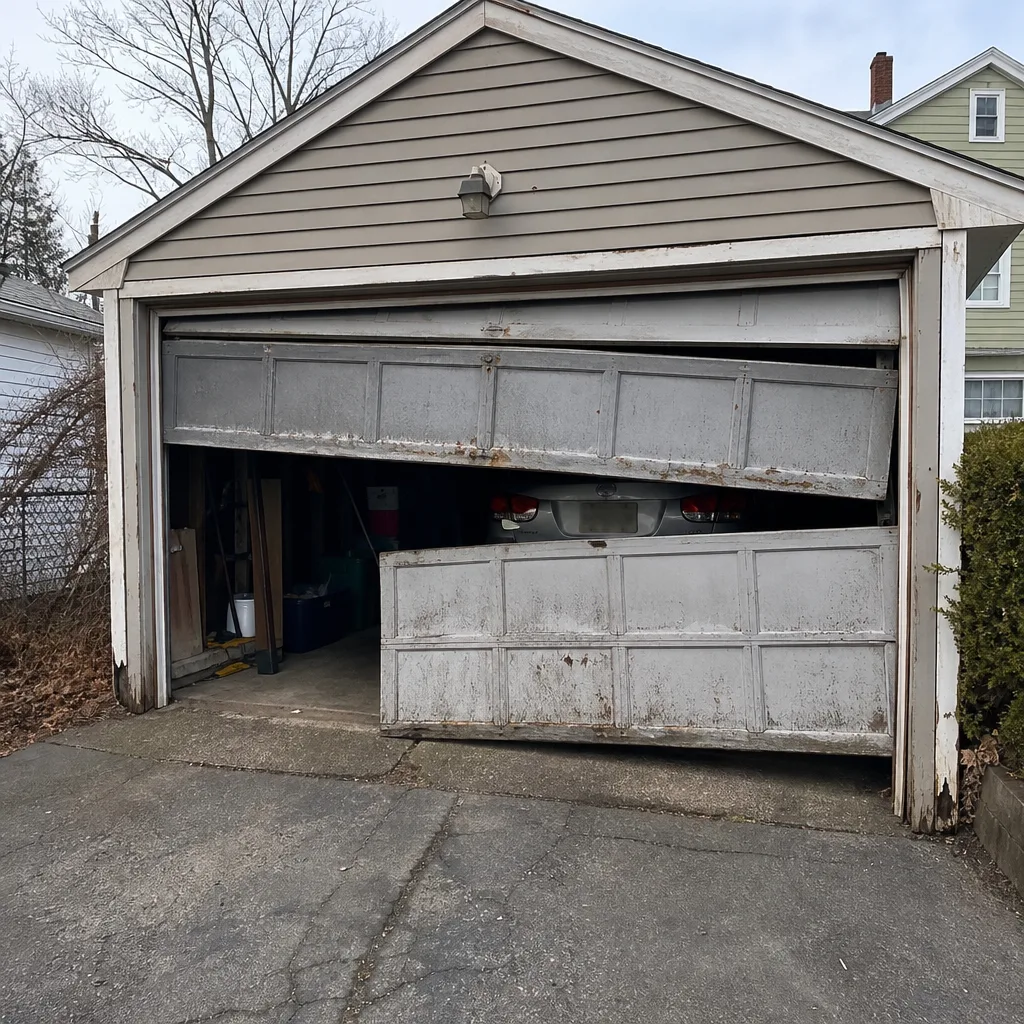 Before
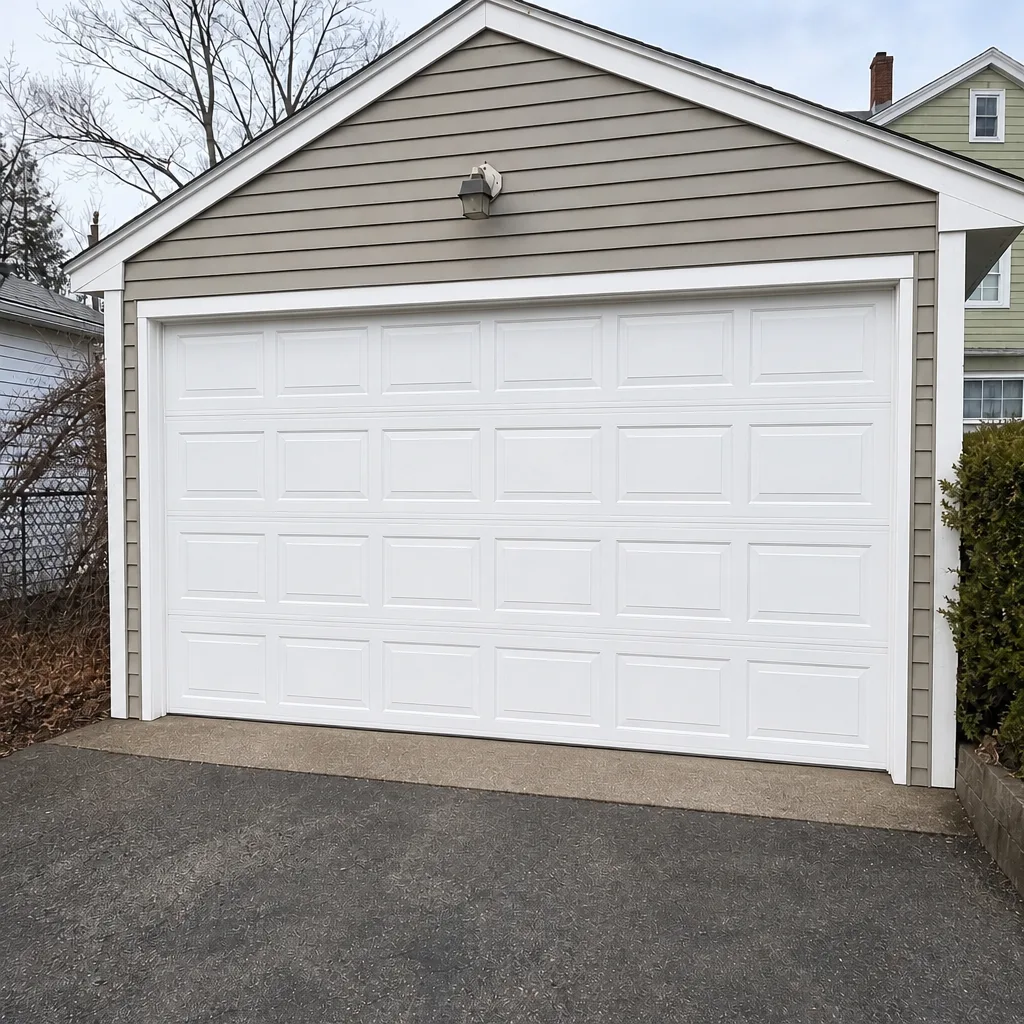 After
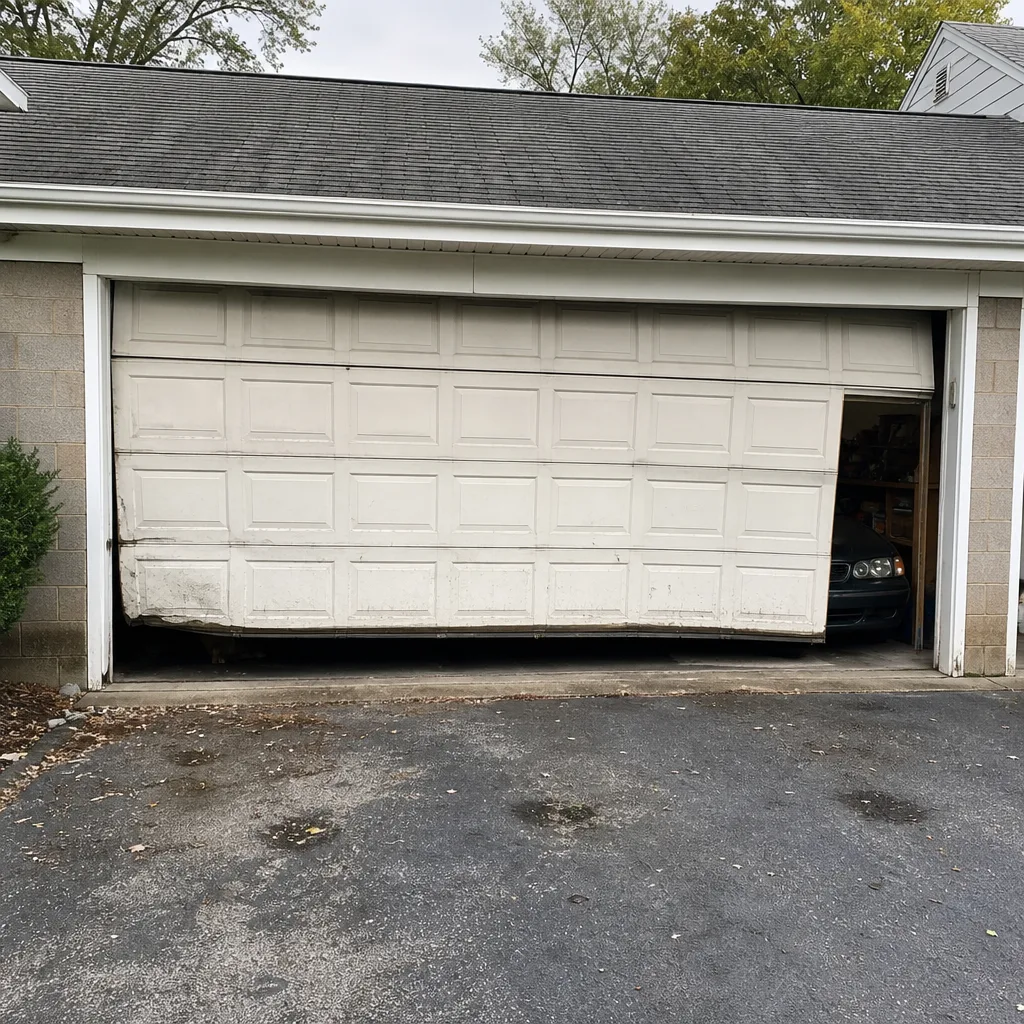 Before
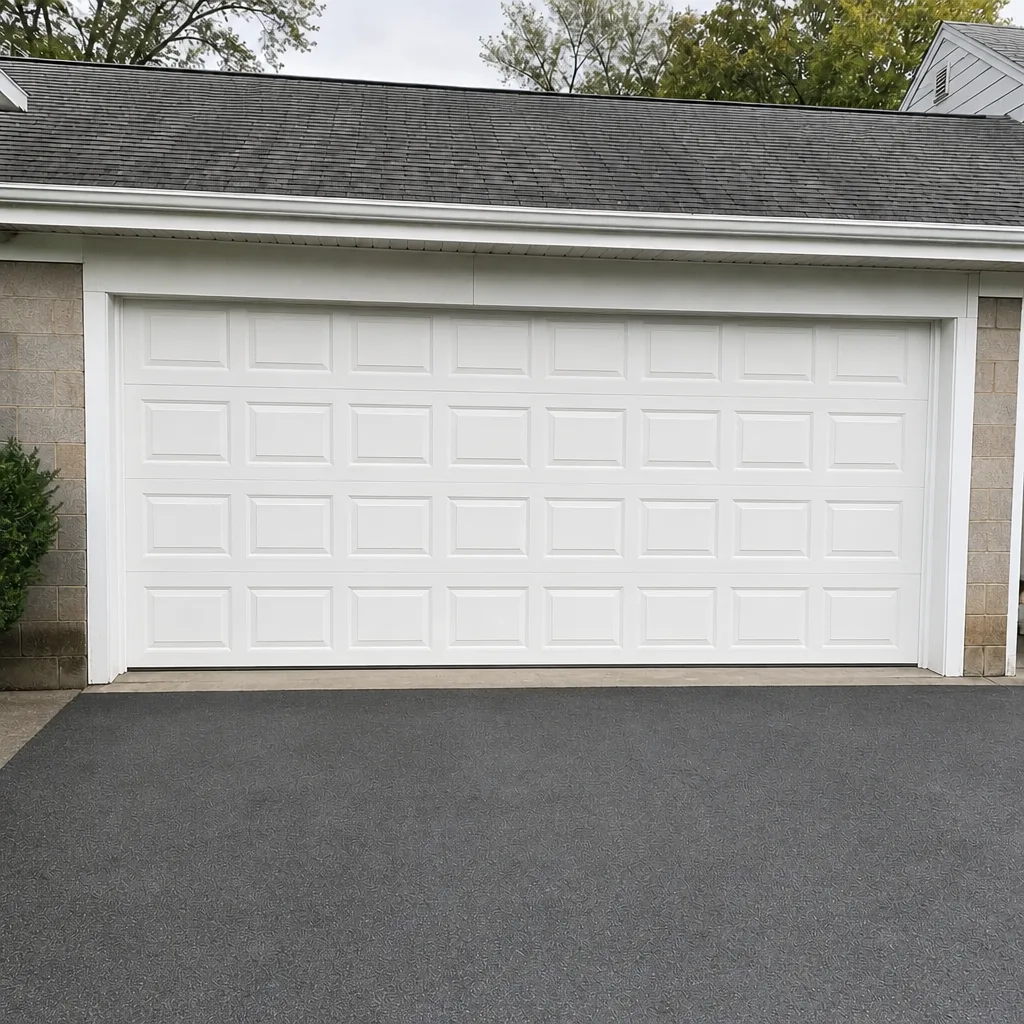 After
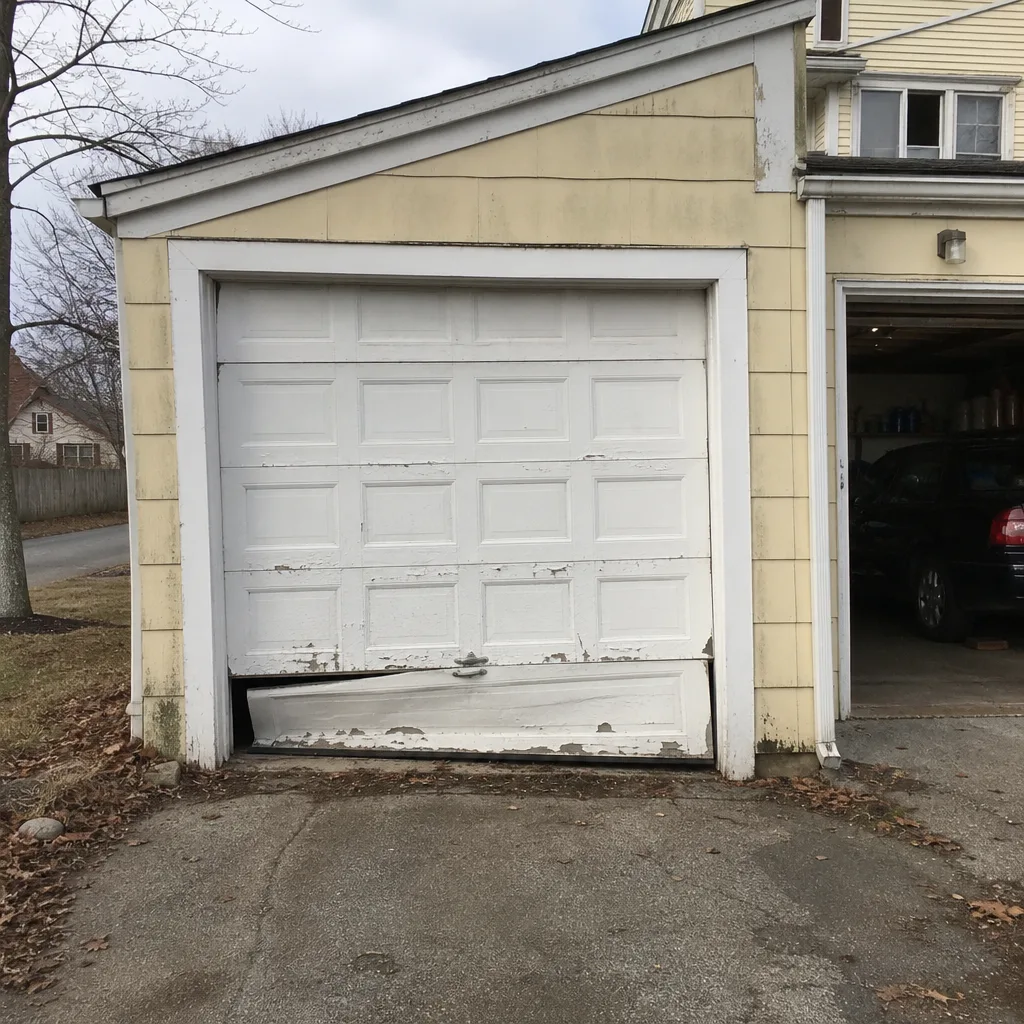 Before
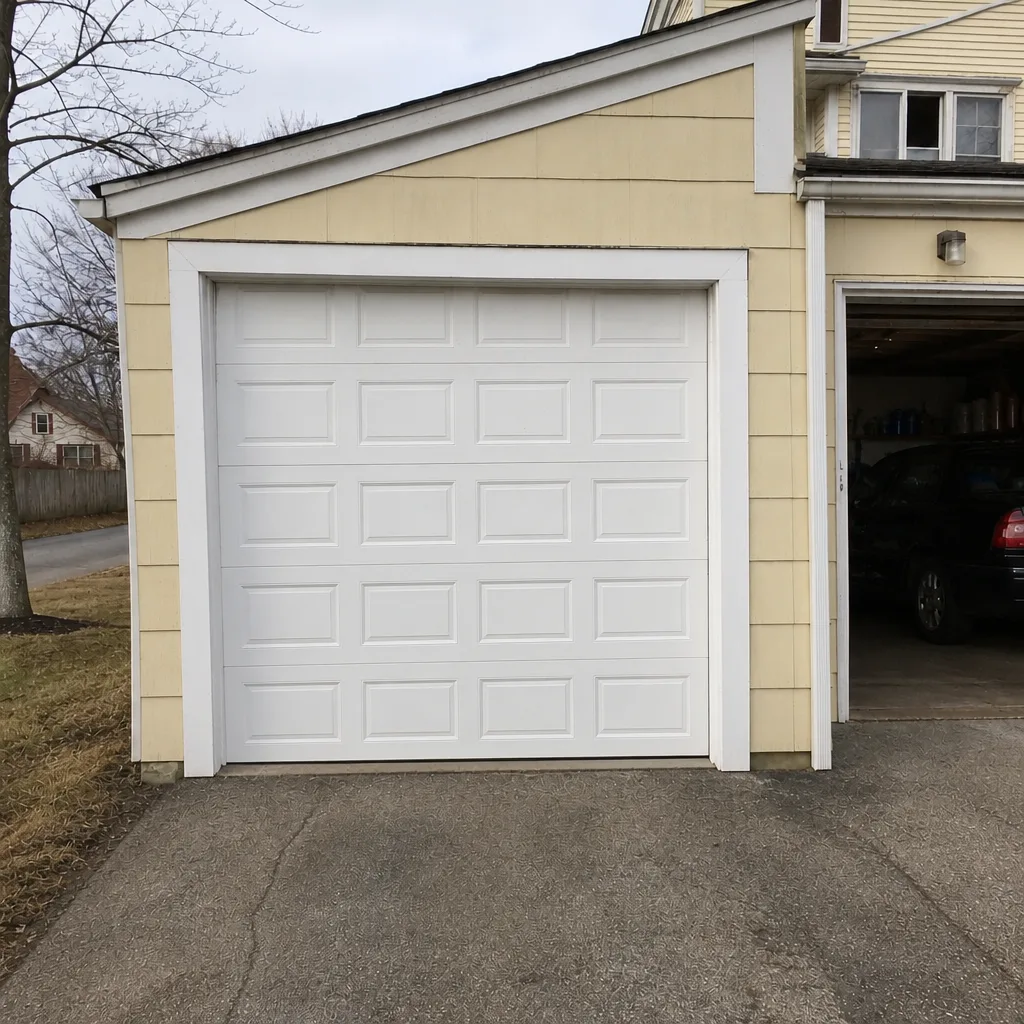 After
When to Call a Professional
Call a professional the moment the job involves spring tension, cables, track realignment on a door that’s off-level, or anything electrical inside the opener. Call immediately if the door has come off its track, if a spring has broken, or if the door won’t close and the garage is open to the street – those are the situations where a same-day visit matters most. And call before you buy parts for a job you’re not sure about, since a wrong part is more expensive than an estimate. Garage Door Repair Springfield Pros offers free estimates in Springfield – call (866) 412-1607 and we’ll tell you honestly whether your job is a homeowner task or a technician task.
Frequently Asked Questions
No. A torsion spring holds enough stored energy to cause serious injury if a winding rod slips, and the specialty tools aren’t stocked at most hardware stores in Springfield. Spring replacement belongs with a trained technician, and it’s the one job we tell every homeowner not to attempt. Call (866) 412-1607 for a free estimate.
Typical repairs in the Springfield area run from around $150 to $400 depending on the part and the door type, and spring replacement is usually a separate line item because a matched pair is replaced together. The written estimate sets the final price, and the price is quoted and agreed before any work starts. Call (866) 412-1607 for an exact quote – estimates are free.
It depends on your policy and how the damage happened. Sudden accidental damage is often covered, but a claim from work that wasn’t done to manufacturer instructions can be disputed. Keep records of any work done on the door, whether you did it or a professional did, and check with your insurer before assuming a DIY repair is fully covered.
Torsion springs mount above the door and twist to store energy; extension springs run alongside the tracks and stretch. Torsion springs are more common on newer doors and are the higher-tension system. Both fail with a loud bang and both require professional replacement. If you’re not sure which you have, look above the door – a horizontal coil on a shaft is torsion, a spring running parallel to the track is extension.
For repair calls, yes – same-day service is available for most repairs, and emergency service covers the situations where a door is broken, stuck open, or unsafe. For installation or replacement, the work has to be measured, ordered, and scheduled, so those are booked rather than same-day. Call (866) 412-1607 and we’ll tell you what your job needs.
The local professional we connect you with is licensed and insured as their state requires, and our technicians have up to 12 years of experience. We’re certified to work on LiftMaster, Chamberlain, Genie, Clopay, Amarr, Wayne Dalton, Craftsman, and Raynor equipment. Call (866) 412-1607 to book an estimate.
The Bottom Line
The right answer to the DIY question isn’t “never” or “always.” It’s a risk map. Painting, cleaning, lubricating, testing, and documenting are yours to do, and doing them well cuts your repair bill. Springs, cables, track realignment, and opener electrics are professional work, and the physics of stored spring energy is the reason – not a sales pitch. Springfield’s cold winters make the mechanical parts work harder, so test the balance before every season and call at the first sign of a spring problem. If you’re unsure which side of the line your job falls on, call (866) 412-1607 for a free estimate. Garage Door Repair Springfield Pros handles the repair, the garage door opener repair, the spring work, and full installation, and we quote the price before any work starts. For the full range of what we do, see Garage Door Repair Springfield Pros.
Written by the team at Garage Door Repair Springfield Pros.