Last updated November 21, 2026
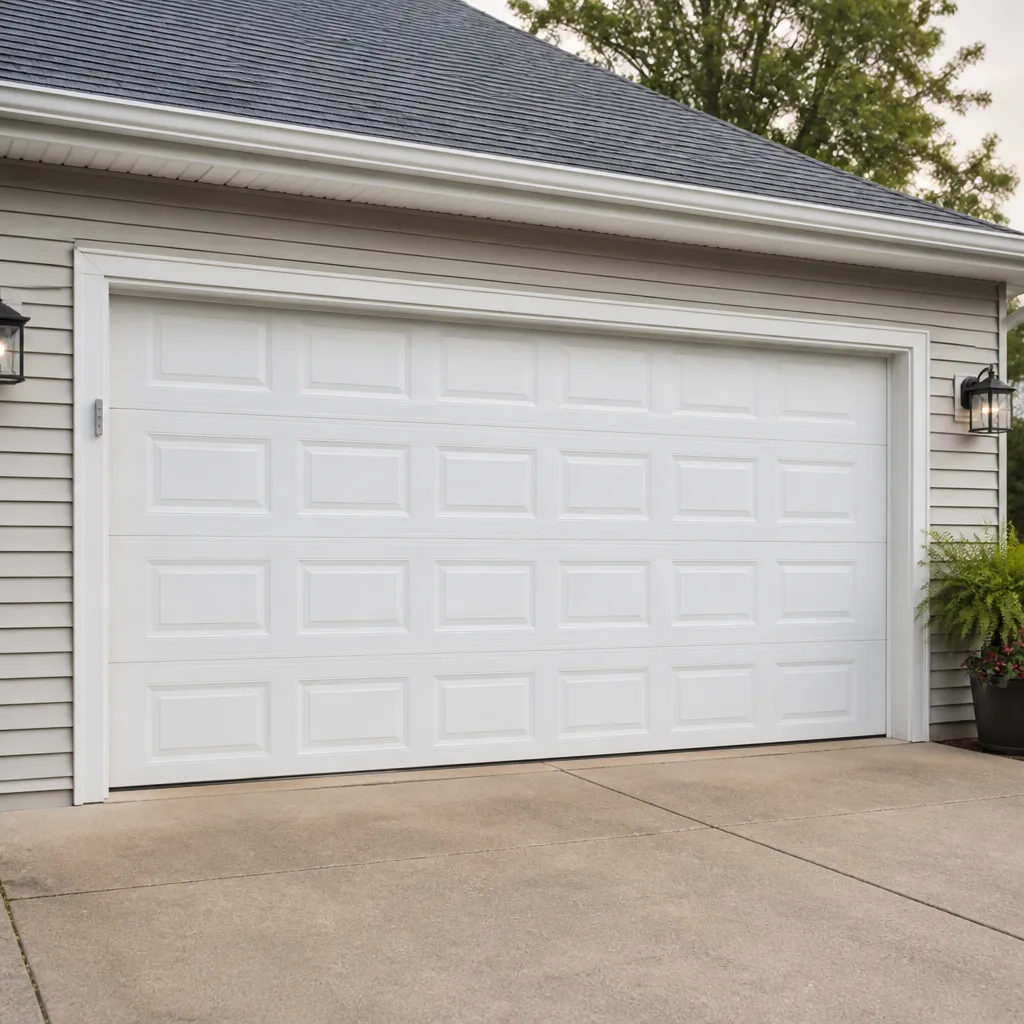 Raised-panel steel
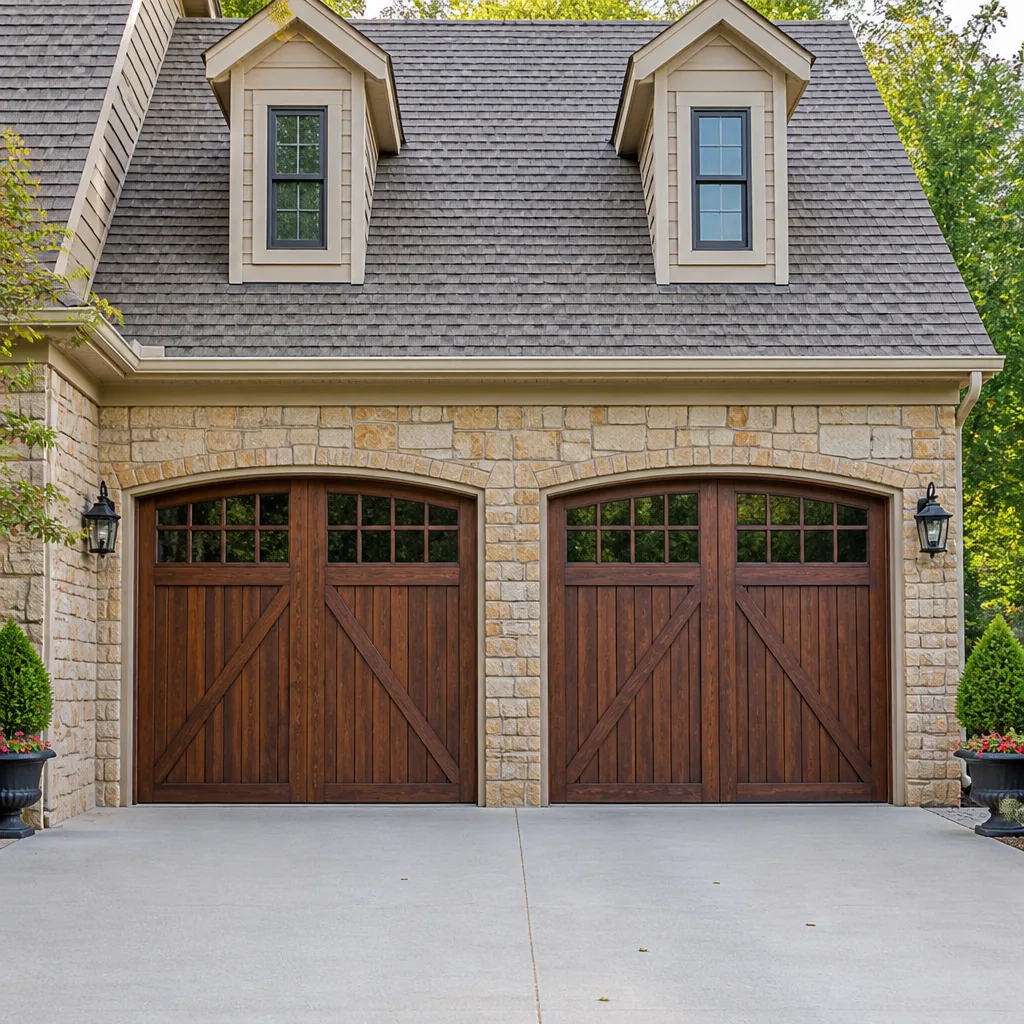 Carriage house
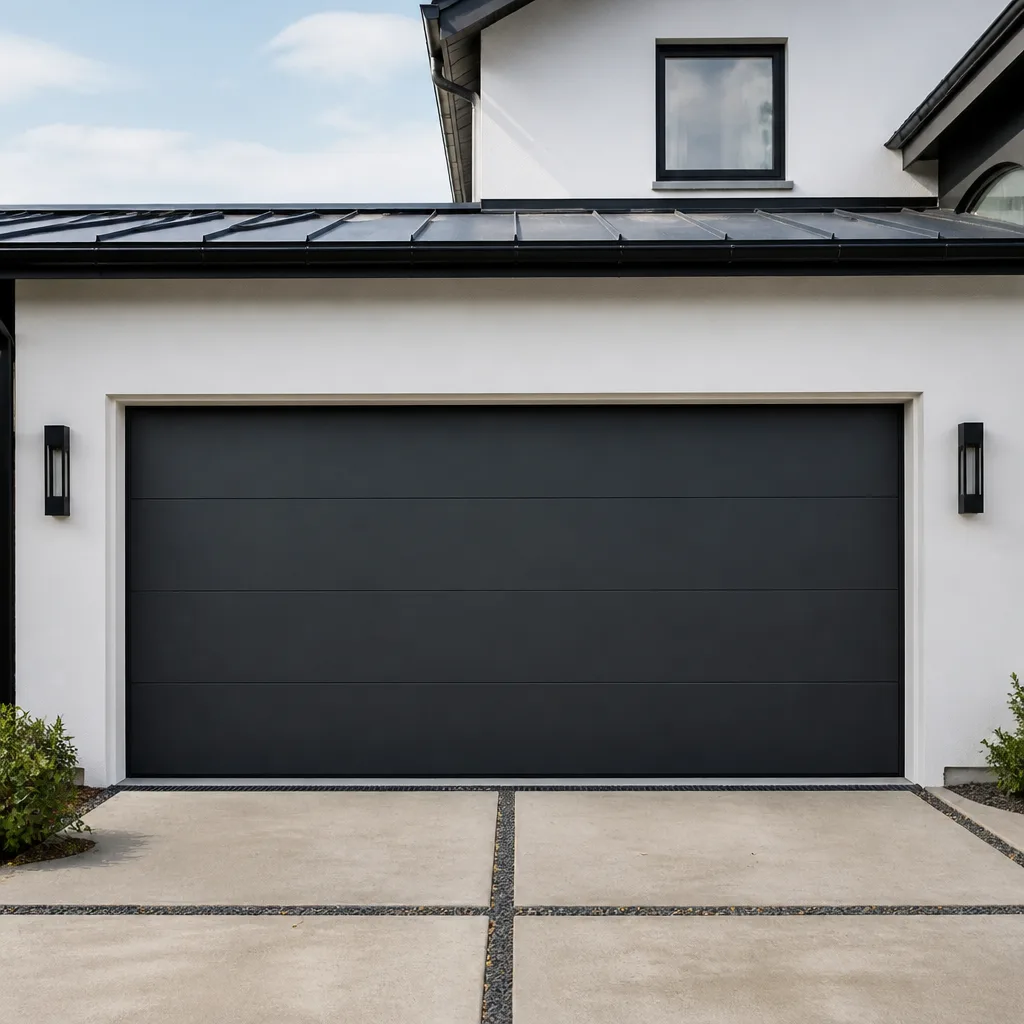 Modern flush
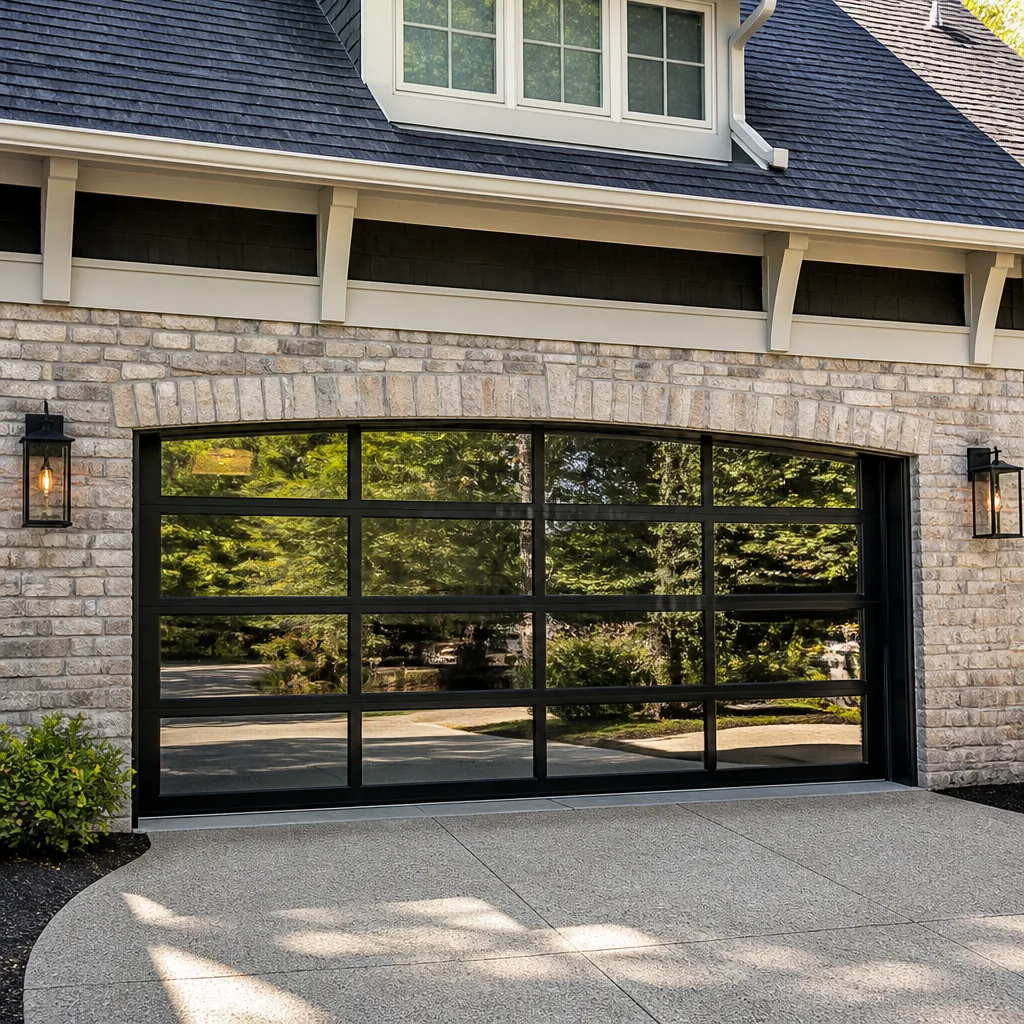 Full-view glass
 LiftMaster openers
 Chamberlain openers
Full 25-point door and opener safety check with every visit - springs, cables, rollers, tracks, and your LiftMaster or Chamberlain opener included
You get a price before we start. It does not change when the pro arrives.
Get your free estimateGarage Door Warning Signs: A Springfield Homeowner’s Reference Guide
A garage door that hesitates for two seconds before it opens looks like an opener problem. It usually isn’t. In our experience, that pause is commonly a sign of a torsion spring that has quietly lost tension and is now working well outside its design range, which means the expensive repair you’re bracing for could be a much cheaper one – or a much bigger one than you think. The trick is knowing which. Most warning-sign advice online just hands you a list of symptoms. This guide does something more useful: it sorts every common symptom into one of three urgency tiers – watch, service soon, or stop using the door today – because those three have completely different risk and cost behind them. If you’re in Springfield, this reference is built for your climate, your housing stock, and the way your door actually behaves over a Massachusetts winter.
Quick Answer
Garage door warning signs in Springfield fall into three urgency tiers: cosmetic issues you can monitor, problems you should book service for soon, and faults that mean stop using the door immediately (snapped springs, frayed cables, a badly off-track door). The single most telling sign is a door that moves slowly, hesitates, or sags to one side, which usually points to spring or track trouble rather than the opener. If the door is hanging wrong, making a loud bang, or won’t stay up, treat it as an emergency and get a professional out before you use it again.
Styles & brands we work with
- Raised-panel steel
- Carriage house
- Modern flush
- Full-view glass
- LiftMaster openers
- Chamberlain openers
Table of Contents
- The Three-Tier System: Watch, Service Soon, Stop Now
- The Sounds That Tell You Which Part Is Failing
- Visual Inspection from the Driveway: Reading a Door That Hangs Wrong
- Why a Slow Door and a Noisy Door Are Almost Never the Same Problem
- The Monthly Balance Test Every Homeowner Should Run
- How Springfield’s Seasons Show Up in Your Door
- What Your Brand Tells You About Your Symptoms
- Putting the Tiers to Work: A Symptom-to-Action Walkthrough
The Three-Tier System: Watch, Service Soon, Stop Now
Before you can decide what to do about a warning sign, you need a way to sort it. Every symptom we come across at Garage Door Repair Springfield Pros falls into one of three buckets, and putting a sign in the right bucket saves you money and keeps you safe. Here’s the framework.
Tier 1 – Watch it (cosmetic or monitor)
- A single noisy roller or hinge that squeaks but the door moves smoothly.
- Minor weather-seal gaps along the bottom or sides.
- Paint fading or light surface rust on steel panels.
- A remote or wall control that occasionally needs a second press.
These are the “note it and check back” signs. None of them threaten the door’s operation or your safety today, but each one is worth writing down so you notice if it changes.
Tier 2 – Service soon (schedule a repair)
- The door opens more slowly than it used to, or pauses before moving.
- It’s getting louder – grinding, rumbling, or a rhythmic thumping.
- The door drifts down a few inches after you lift it halfway by hand.
- One side looks slightly lower than the other when closed.
- The opener strains or the door reverses when it shouldn’t.
These point to a part that’s wearing or has lost tension. The door still works, but it’s telling you a component is on its way out. Book a service call before it becomes a Tier 3 problem.
Tier 3 – Stop using it immediately (emergency)
- You heard a loud bang and the door won’t lift – a snapped spring.
- A cable is visibly frayed, kinked, or hanging loose.
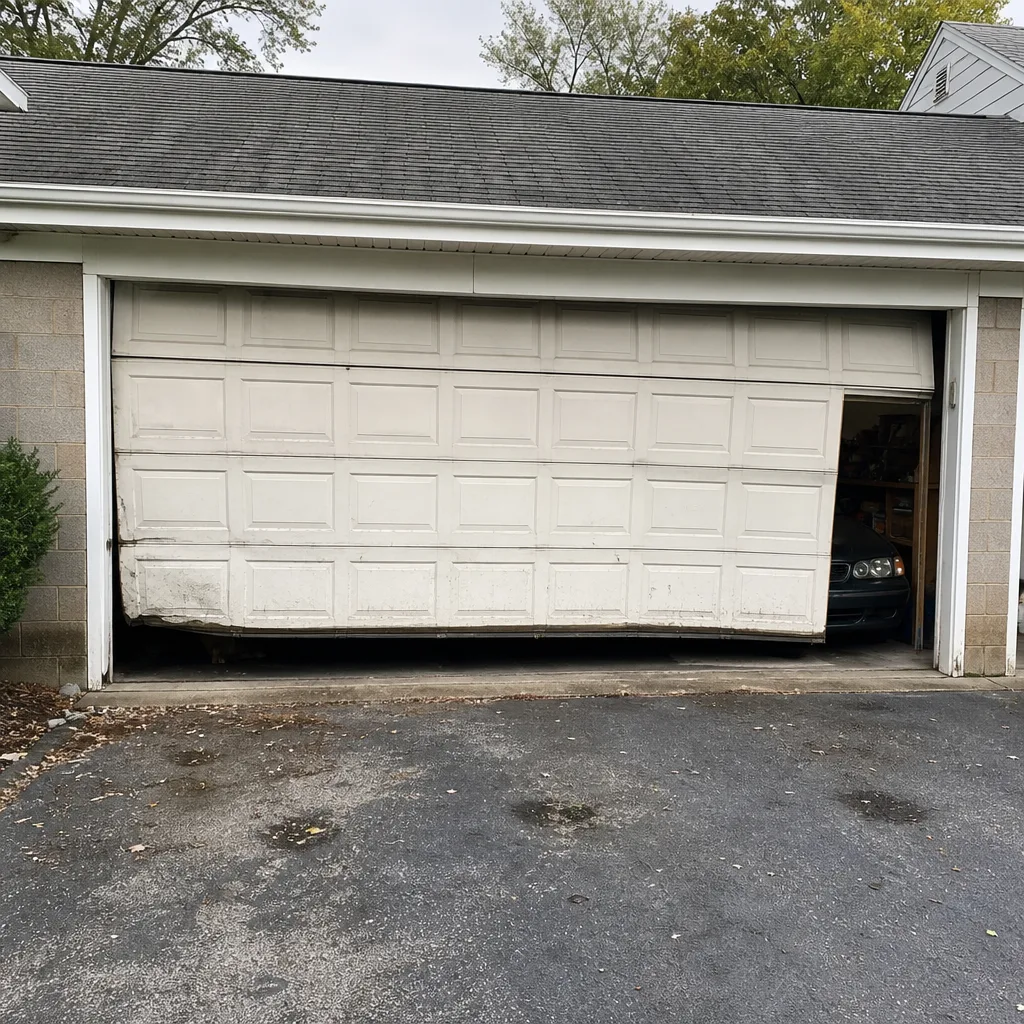
- The door is crooked, jammed, or off its track.
- The door won’t stay up when you lift it, or slams down.
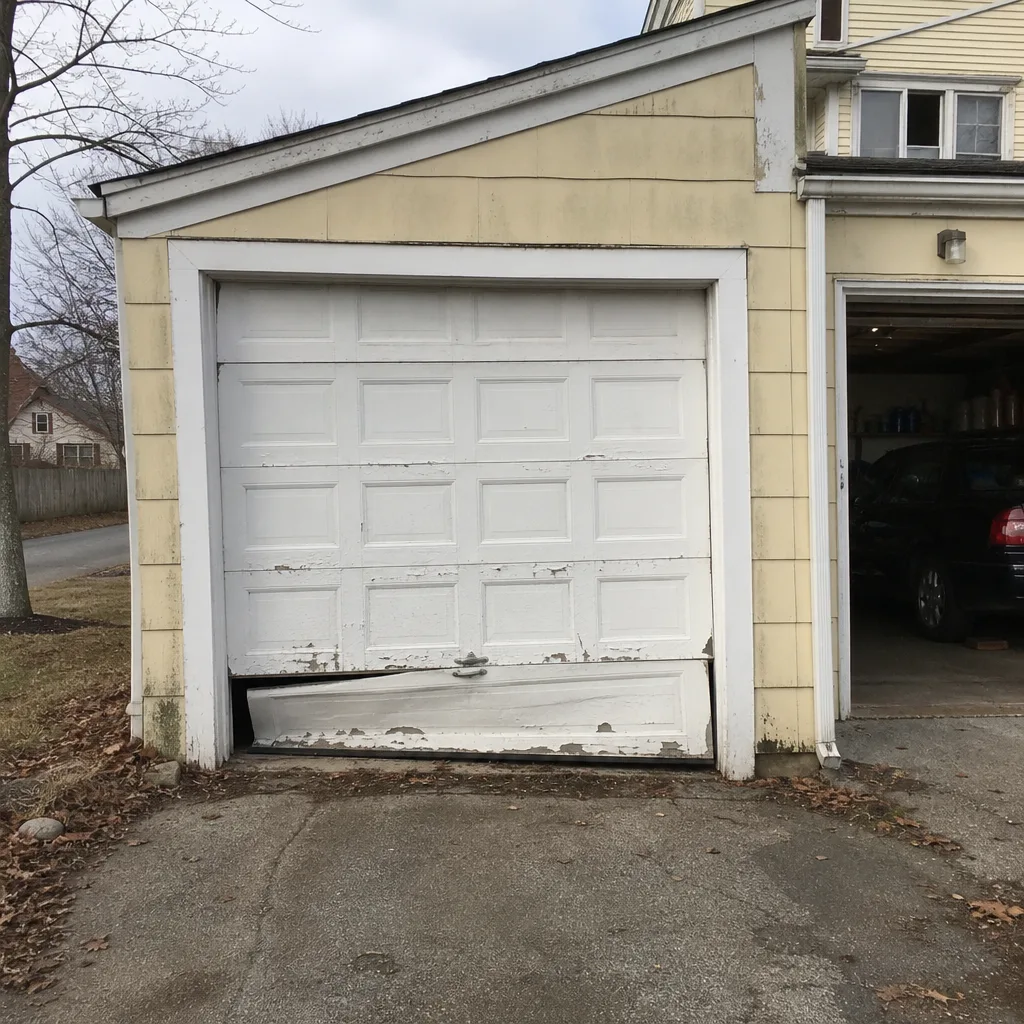
- You can see a gap between a panel and the track, or the door is bent at a hinge.
These are stop signals. A door in this state can fall, and a snapped spring or loose cable can cause serious injury. Leave it where it is, keep people and cars clear, and call for emergency service rather than forcing it. This is exactly the kind of situation where our emergency service exists, and it’s the reason we offer it.
The Sounds That Tell You Which Part Is Failing
Sound is the most underrated diagnostic tool a homeowner has, and a door that’s saying something specific is easier to sort than one that just “seems off.” Different noises come from different parts, and learning to tell them apart saves you from guessing.
The grinding that gets worse as the door rises
A harsh grinding noise that builds as the door climbs usually points to a cable drum or a bearing at the end of the torsion shaft. When a drum starts to bind, the cable winds unevenly and the grind gets louder with travel. This is a Tier 2 sign at minimum. Don’t ignore it, because a failing drum can let a cable slip, and that moves you straight into stop-now territory.
The squeal that doesn’t change
A high, steady squeal that stays the same from bottom to top is almost always a worn roller or a dry hinge. Rollers on their way out squeal as the stem turns in the bracket. This is usually cosmetic-tier and easy to sort – a worn roller or two replaced and the noise is gone. It’s not a safety issue, but it’s a nuisance that only gets louder.
The sharp metallic snap or bang
A single loud bang followed by a door that won’t lift is the signature of a snapped torsion spring. If you hear it, stop. Don’t try to raise the door, don’t pull the emergency release on the opener, and don’t stand under it. That’s a Tier 3 call – a real emergency – and it’s where the door stays until a technician gets there. A spring under load stores a lot of energy, and it’s not something to work around yourself. This is the highest-risk repair in the trade and it’s why spring work is a core part of what we do.
The rattle or clunk you feel more than hear
A rattle near the top of a travel or a clunk as the door settles closed often points to a loose bracket, a worn hinge, or a pulley that’s starting to seize. These don’t always announce themselves loudly. If you can’t place a sound to a part, that’s a good reason to have someone look. Our technicians have up to 12 years of experience pinpointing exactly which sound belongs to which part.
Visual Inspection from the Driveway: Reading a Door That Hangs Wrong
You can learn a lot about your door without touching it or opening it. Stand at the end of the driveway, look straight on, and watch the door as it opens and closes. What you’re looking for is symmetry, smooth travel, and a square edge. A door that hangs wrong tells you which component has failed, and this is one of the most useful checks a Springfield homeowner can make.
- Look at the gap between the door and the floor. A door that sits flush on one side and leaves a gap on the other is out of balance. That usually means a failing spring or a cable that’s stretched, not an opener fault.
- Watch the door travel. If one side lags the other as it rises, the door is racking. Racking points to unequal spring tension or a track that’s out of alignment.
- Check the panels. A panel that’s bent along a hinge, or a visible dent in the middle of the door, can catch the track and pull the whole door off course.
- Look at the tracks. A track that’s bowed, kinked, or visibly off vertical is a stop-now sign. A door running on a bent track can jam and fall.
- Eyeball the springs above the door. A torsion spring with a visible gap in the coil, or an extension spring that’s stretched and hanging loose, has failed. Don’t run the door.
If the door hangs wrong but still moves, treat it as Tier 2 and book it. If it’s bent, jammed, or off its track, that’s Tier 3 – don’t cycle it. A crooked door under spring tension is unpredictable, so the safe move is to leave it and call.
Why a Slow Door and a Noisy Door Are Almost Never the Same Problem
This is the single most common misdiagnosis we see. A slow door and a noisy door sound like the same complaint, but they’re usually two different failures, and confusing them leads to the wrong repair being done – or a part being replaced that didn’t need it.
Slow means load
A door that moves slowly, hesitates, or feels heavier than it used to is almost always fighting a load problem. The most common cause is a torsion spring that has lost some of its tension. The opener is doing more of the work than it should, so it seems sluggish. Replace the opener to fix a slow door and you’ve spent money on the wrong part; the spring is the thing to check. A door that’s genuinely slow is Tier 2 – it’s wearing the opener out every time you run it, so book it soon.
Noisy means contact
A noisy door is usually a mechanical contact problem – rollers, hinges, bearings, or a dry track. The parts that roll or pivot are making contact where they shouldn’t or running dry. This is generally less urgent, and fixing it usually means labor and a few small parts, not a major spring repair. A roller or two and a proper lubrication pass and a noisy door goes quiet.
Why the mix-up matters
If a homeowner decides a slow door must be an opener problem, they pay for a new opener and the door stays slow. If they decide a noisy door is a spring problem, they pay for spring work that wasn’t needed. Getting the diagnosis right is the whole point of the three-tier system. It’s also why we keep the door and the opener in-house – one call covers both, and the technician can trace a symptom to the right part instead of guessing at the door or the motor separately.
If you’ve already had an opener replaced and the door is still slow, that’s a strong signal the issue was mechanical all along. That’s the sort of thing a garage door opener repair visit is designed to sort out before parts get replaced – because the first job is figuring out whether the opener is actually the fault.
The Monthly Balance Test Every Homeowner Should Run
There’s one check that tells you more about your door’s health than any other, and it takes about two minutes. Run it once a month and you’ll spot a failing spring weeks before it snaps. Because a torsion spring commonly loses tension gradually, the door’s behavior over time is your best early-warning signal – and the balance test is how you read it.
- Close the door and disconnect the opener. Pull the emergency release handle so the door moves by hand. If you’re not comfortable with this step on a heavy door, skip the test and book a service call.
- Raise the door about halfway and stop. Let go gently. It should hold in place.
- Watch for drift. A door that sags or drops on its own has lost spring tension. A door that slowly sinks is telling you the spring is weakening.
- Lift it all the way and lower it by hand. It should feel even on both sides. A door that’s much harder to lift in the second half of travel or feels uneven is out of balance.
- Reconnect the opener and run it once. If it sounds or moves differently than it did before the check, note it and have it looked at.
Here’s how to read the results in precise terms. If the door holds in place and feels even, your springs are working as designed – watch tier. If it drifts down a few inches or feels noticeably heavier than a month ago, the springs have lost tension and you’re in service-soon territory; book the repair before the wear accelerates. If the door drops hard or feels dangerously heavy, stop using it and treat it as an emergency. A door that won’t stay up is a door that can fall.
In our experience, the balance test is where most “watch it” doors become “service soon” doors, and catching that shift early is what keeps a garage door spring repair a straightforward job rather than an emergency call.
How Springfield’s Seasons Show Up in Your Door
A garage door in Springfield lives through a wide swing of temperature and moisture across the year, and those swings show up in the symptoms you’ll see. New England winters are cold and the freeze-thaw cycle is hard on materials; summers are warm and humid. That cycle is a useful frame for understanding which symptoms matter when.
- Cold weather stresses springs and bearings. A spring that’s already above its working range can be pushed past it on the coldest mornings. A door that’s balky on a cold morning and fine by afternoon is telling you the spring has lost tension – service-soon sign.
- Freeze-thaw works on the bottom seal and floor. Moisture at the threshold can pull a seal away from the door or leave a gap under it. That’s usually watch-tier, but a gap at the bottom lets in cold air and pests, so it’s worth sorting.
- Humidity and rain drive track and roller friction. Steel rollers can bind and tracks can get grimy, so a door that’s noisier in the damp months often just needs a clean-and-lube and maybe a roller or two.
- Seasonal wood movement in older doors. Some Springfield homes have wood doors that swell and shrink with the seasons; a panel that catches a track only in certain weather is often a sign the door needs adjustment, not a spring.
The pattern to hold onto: cold and dry points at springs, damp and warm points at rollers and tracks. That’s not a rule of physics, but it’s a reliable way to sort what you’re hearing as the seasons change.
For a fuller picture of what a repair visit covers as the weather shifts, our garage door repair page lays out the common jobs we handle across the year.
What Your Brand Tells You About Your Symptoms
Your door and your opener are two different systems from two different makers, and knowing which brand is which helps you interpret a symptom. A symptom in a Clopay door is a different thing than a symptom in a Genie opener. The door is the mechanical structure – panels, tracks, springs, hinges. The opener is the motor and drive system that lifts it. Most of the warning signs in this guide come from the door, not the opener, which is why we look at the door first.
We’re equipped to service eight major brands in both categories: LiftMaster, Chamberlain, Genie, Clopay, Amarr, Wayne Dalton, Craftsman, and Raynor. That covers nearly any door or opener a Springfield homeowner already owns. A few examples of how brand shapes the diagnosis:
- A Clopay or Amarr door is often a steel sectional, so noisy-roller and dented-panel symptoms are the usual suspects, and the fix is usually rollers, hinges, or panel work rather than a full replacement.
- A Genie or Chamberlain opener that stutters or reverses unexpectedly is usually an opener or sensor issue, not a spring problem – and that’s a different repair from a mechanical door fix.
- A Wayne Dalton door with a proprietary spring system needs the right parts on hand, which is why knowing the brand before the visit matters.
This is the practical reason we say we work on your brand: the diagnosis gets faster and the repair gets right the first time. It’s also why we’re a garage-door-only operation. The technicians who come out focus on doors and door openers, not a dozen other trades. When a symptom is ambiguous, that focus is what turns a guess into a call. For a full picture of our services, our Garage Door Repair Springfield Pros home page is the place to start.
Putting the Tiers to Work: A Symptom-to-Action Walkthrough
Here’s how the framework plays out for the most common scenarios, which is the part most homeowners actually need. If you can match your symptom to a tier, you know what to do next.
| Symptom | Usual cause | Tier / action |
|---|---|---|
| Door hesitates or opens slowly | Lost spring tension | Service soon – book a spring repair |
| Steady squeal, top to bottom | Worn roller or dry hinge | Watch – replace roller when convenient |
| Grinding that grows as it rises | Cable drum or bearing binding | Service soon – inspect promptly |
| Loud bang, door won’t lift | Snapped torsion spring | Stop now – emergency service |
| Door hangs crooked | Unequal spring tension or track issue | Service soon, or stop now if jammed |
| Frayed or hanging cable | Failing cable | Stop now – do not cycle the door |
| Door drifts down when raised halfway | Weakening spring | Service soon – spring repair |
| Door reverses when closing | Opener sensor or travel setting | Service soon – opener check |
This table is a starting point, not a substitute for a look from a technician. A door can have more than one symptom at once, and two signs that each seem minor can together point to a single failing component. The important thing is that you’ve sorted the problem, and you know whether to call now or schedule soon. That distinction matters – a Tier 3 call should never wait for a convenient morning, and a Tier 1 issue doesn’t need a same-day visit.
If you’re not sure which tier your door belongs in, that’s exactly the question to ask when you call. It’s also a fair reason to get someone out: diagnosing a door over the phone is helpful, but there’s no substitute for seeing it in person. Our garage door repair and maintenance work starts with the same visual and balance checks this guide has laid out, then moves to a firm plan.
Common Mistakes to Avoid
- Assuming a slow door needs a new opener. A slow door is usually a spring problem, and replacing the opener first means paying for the wrong repair. Check the spring and the balance test before you spend on a motor.
- Treating a snapped spring as a scheduling issue. It’s an emergency. A door with a failed spring can’t counterbalance its own weight, so don’t run it and don’t try to force it up by hand.
- Reaching for the torsion spring yourself. A torsion spring under load is the highest-risk part in the system, and working on it without training and the right tools can cause serious injury. It’s the reason spring repair is a job for a trained technician.
- Ignoring a door that hangs a little crooked. A crooked door is telling you it’s out of balance, and an out-of-balance door wears every moving part faster. Left alone, a small alignment issue becomes a bigger repair.
- Ignoring seasonal noise. A door that only squeals or grinds in the damp months is easy to write off, but a small amount of friction becomes a cable or track problem. Get it looked at before winter if the noise is new.
- Calling a general handyman for a garage door. Springs, tracks, cables, and openers are their own skill set, and a generalist may not know your specific brand. A door-only specialist is the right call for the mechanical side.
- Waiting until the door stops entirely. The whole point of the three-tier system is catching a Tier 2 problem before it becomes a Tier 3 emergency, and that saves you both money and stress.
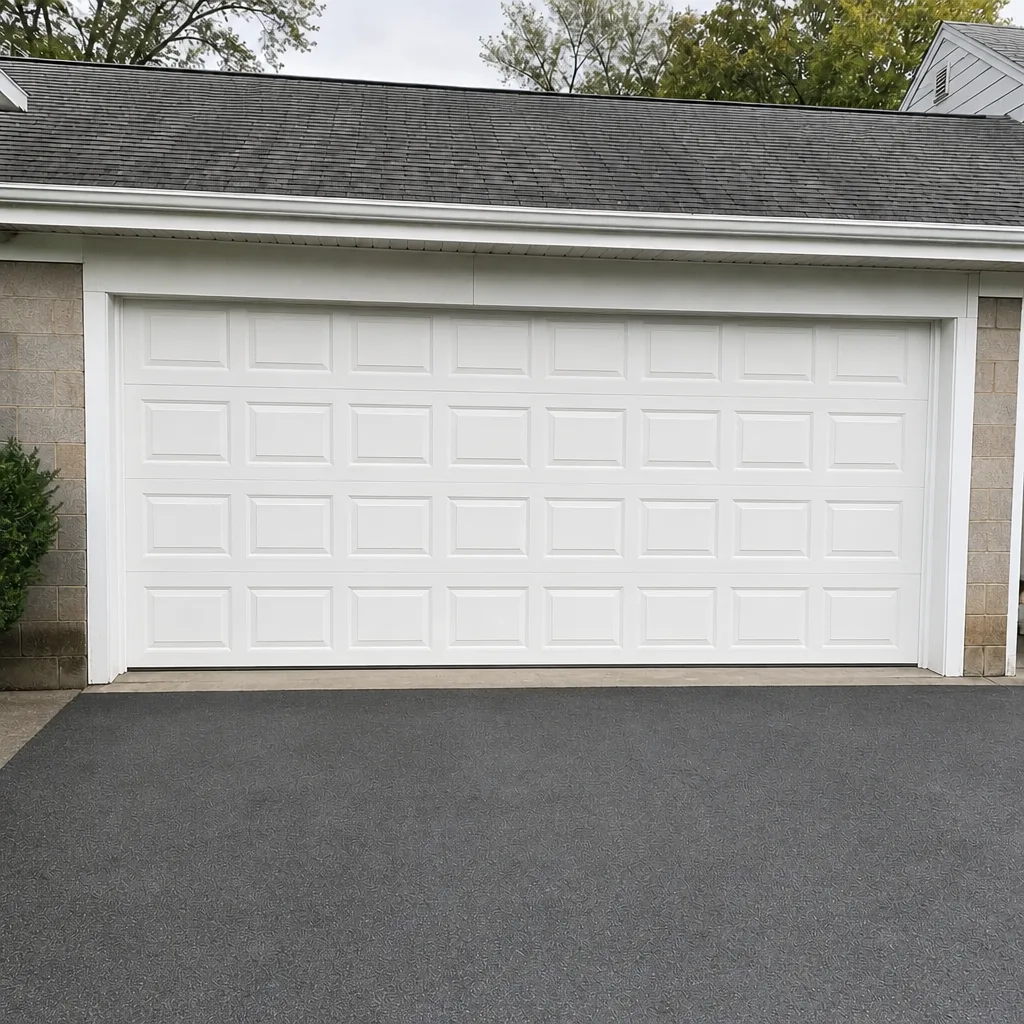
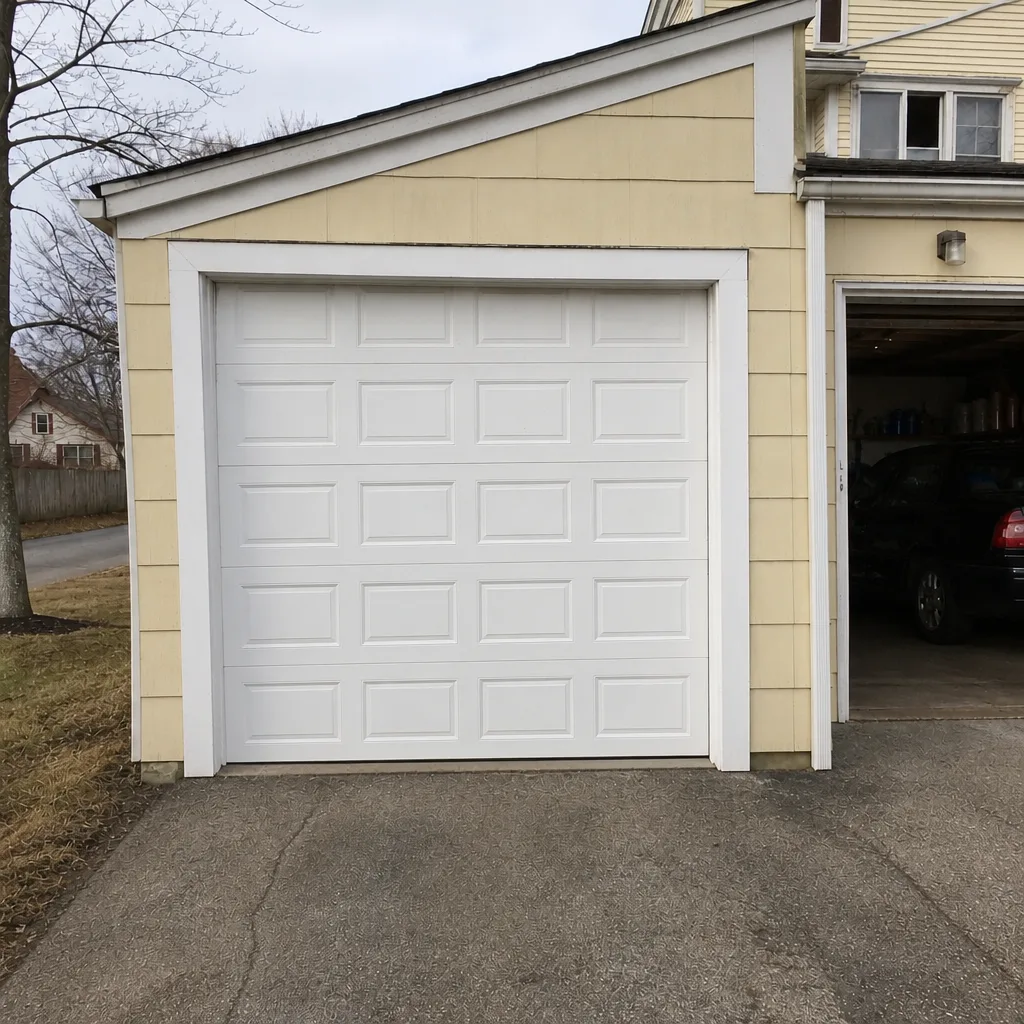
See the difference
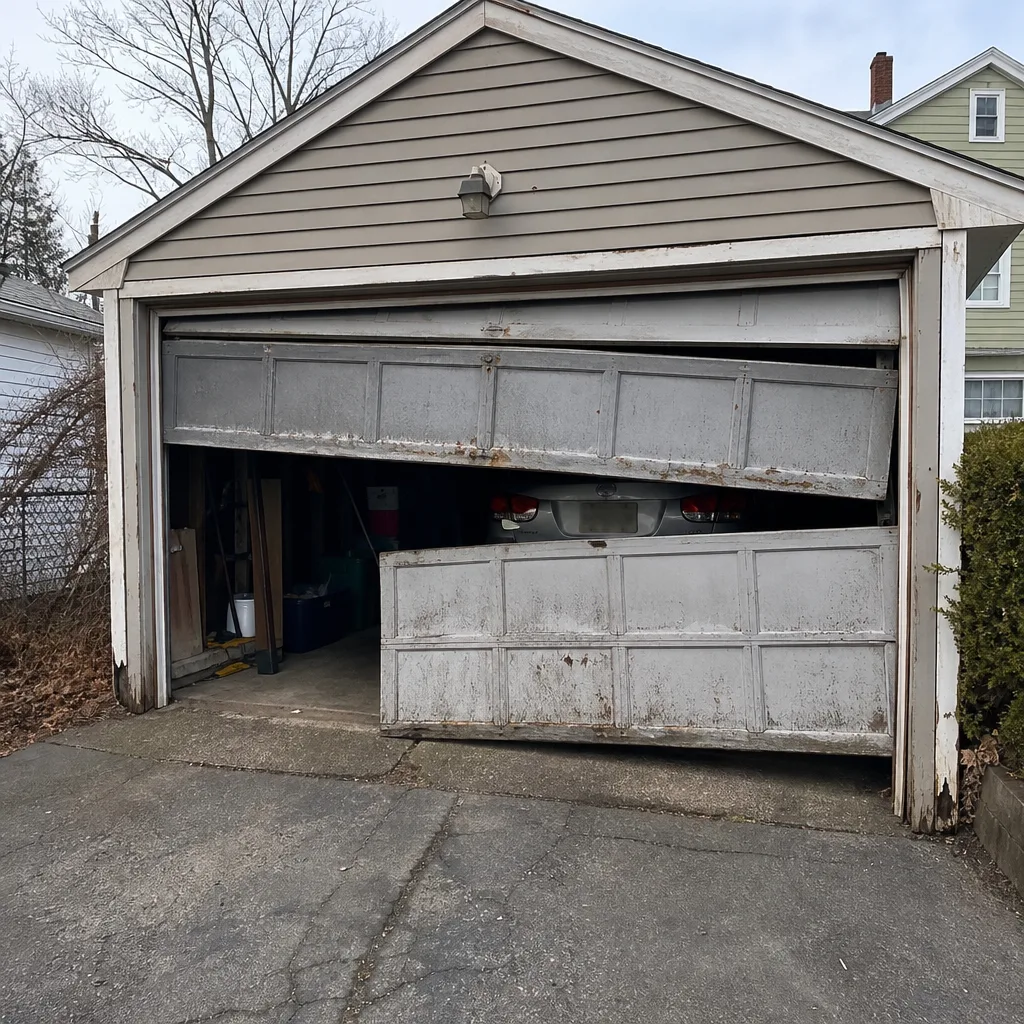 Before
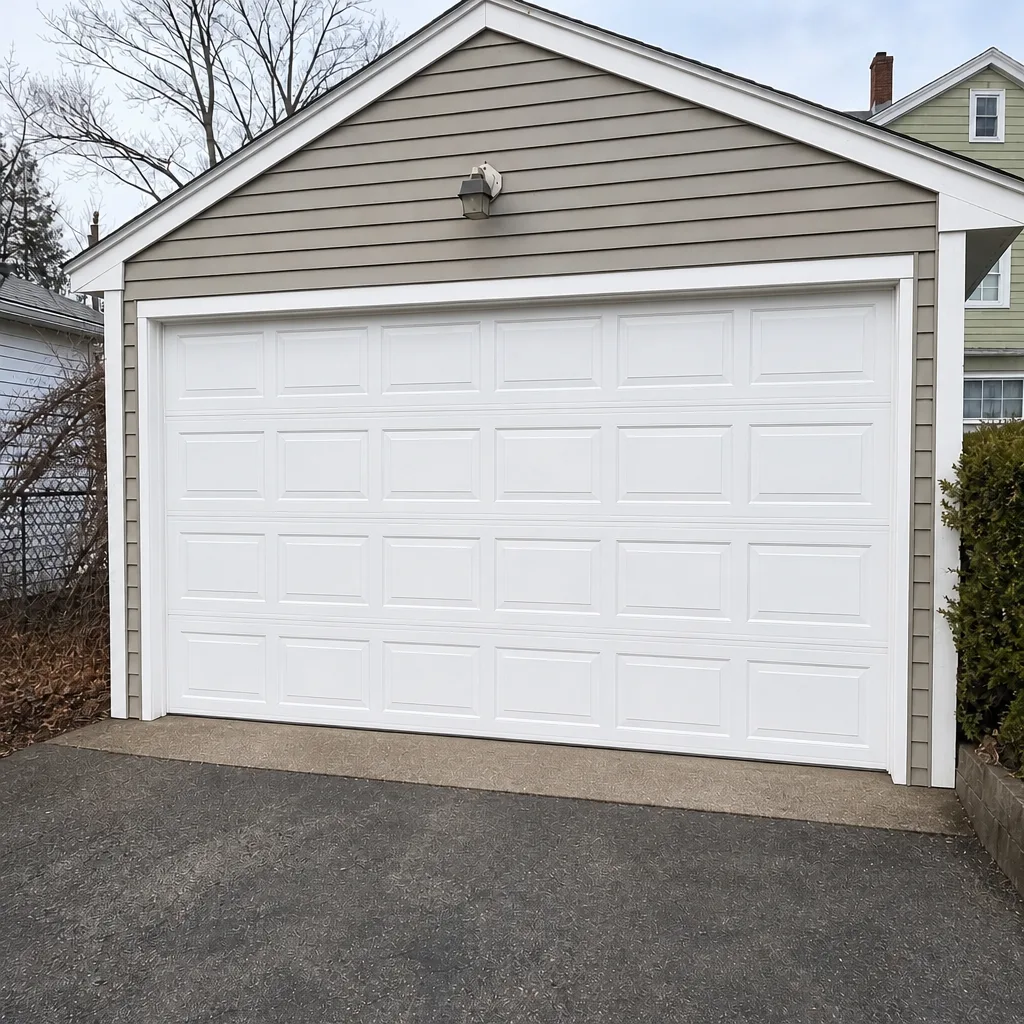 After
 Before
 After
 Before
 After
When to Call a Professional
Call a professional the moment the door gives you a Tier 3 sign – a snapped spring, a frayed cable, an off-track or jammed door – because those are safety issues and the door shouldn’t be used. Call for a scheduled visit if you’re seeing Tier 2 signs: a slow or hesitating door, growing noise, a door that won’t hold its position, or a bar that’s drifted out of balance. And call if you’re simply unsure which tier you’re in; a quick look sorts it. Garage Door Repair Springfield Pros offers emergency service for urgent situations and free estimates across Springfield – call (866) 412-1607. The written estimate sets the final price and is quoted and agreed before any work starts. Our technicians have up to 12 years of experience working on the door and the opener together.
Frequently Asked Questions
Garage door spring repair in Springfield typically runs in the ranges set out in a written estimate after the technician sees the door. A spring price is for one spring, and because torsion springs are usually replaced as a matched pair, a pair costs about twice that single-spring figure. The written estimate you receive after the visit sets the final price, and that price is agreed before any work starts. Call (866) 412-1607 for a free estimate.
A broken spring usually announces itself with a loud bang, and the door won’t lift afterward. You can also check visually: a torsion spring with a gap in the coil, or an extension spring hanging loose, has failed. If you hear that bang or see a gap, stop using the door and call for emergency service – don’t try to lift it or force it.
No. A slow door usually means a torsion spring has lost tension, and tension doesn’t come back on its own. In our experience the door will keep getting slower and the opener will work harder every time until the spring fails. Book a repair while it’s still a scheduled job rather than an emergency.
Cold weather tightens metal and can make rollers, hinges, and tracks noisier, and a spring that’s already weak can feel balky on the coldest mornings. A door that’s noisy and also slow is pointing at the spring; a door that’s noisy but moves at speed usually just needs a roller and lubrication pass. If the noise is new this year, get it checked.
Grinding that gets louder as the door rises is a service-soon sign – stop using the door until it’s looked at, especially if the grind is near the end of the travel. A grinding cable drum can let a cable slip, and that’s a serious safety risk. Don’t run the door repeatedly to “see if it clears.”
We’re equipped to service LiftMaster, Chamberlain, Genie, Clopay, Amarr, Wayne Dalton, Craftsman, and Raynor doors and openers – which covers nearly any system a Springfield homeowner already owns. If you’re not sure which brand you have, that’s fine; the technician will identify it. Call (866) 412-1607 for a free estimate.
The Bottom Line
The key is sorting, not memorizing symptoms. Every warning sign your door gives you belongs to one of three tiers – watch, service soon, or stop now – and each tier has its own right response. A slow or hesitant door usually means spring tension, not a bad opener. A noisy door usually means rollers and tracks. A bang or a crooked door is a stop signal. Run the monthly balance test, note what changes, and let the tier tell you whether to schedule or call right away. When you’re ready for a look, call (866) 412-1607 for a free estimate.
Ready to get your Springfield garage door looked at? Call Garage Door Repair Springfield Pros at (866) 412-1607 for a free estimate. We handle repair, opener repair, spring repair, installation, and emergency service, we work on your brand, and one call covers both the door and the opener. The price is quoted and agreed before any work starts.
Written by the team at Garage Door Repair Springfield Pros.